


Nitrates et méthémoglobinémie : quels risques pour l’eau du robinet ? Comprenez le lien entre ces deux éléments et ce que cela signifie pour votre eau au quotidien.
Your Cart
(0 products)
Your cart is empty
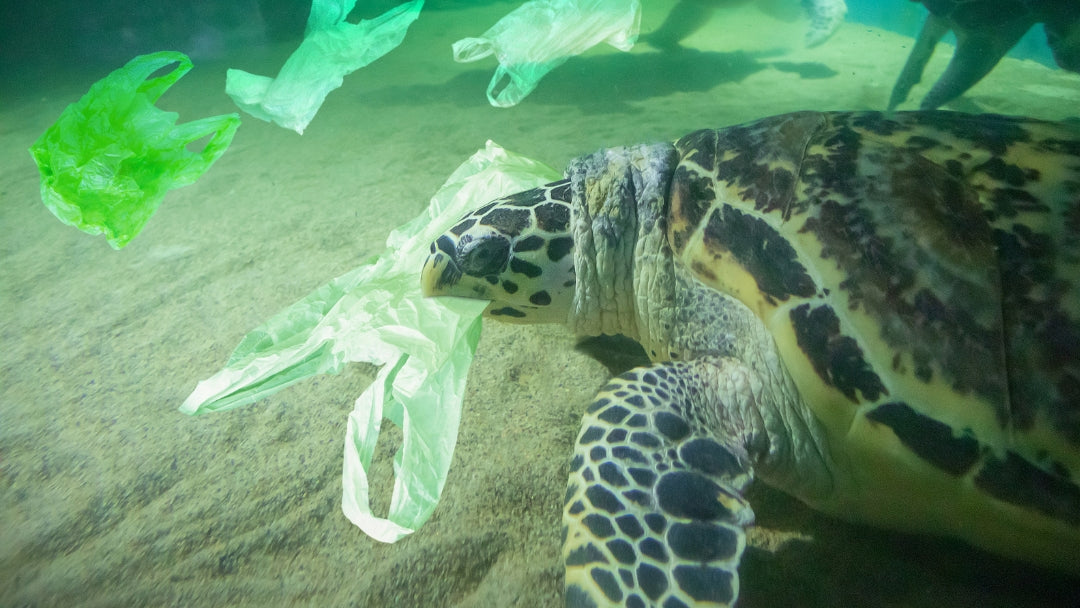
Imagine a world where every minute, the equivalent of a rubbish truck full of plastic is dumped into our oceans and onto our beaches. This alarming reality threatens marine life, our own health and the future of our planet. Faced with this crisis, urgent action is needed to find innovative solutions to stem this tide of waste. Initiatives are emerging, led by charities, governments and scientists determined to protect our marine ecosystems.
Here are a few figures: according to one study, global plastic production rose from 234 million tonnes in 2000 to 460 million tonnes in 2019. It could triple by 2060 if no action is taken. According to WWF France, 8 million tonnes of plastic end up in our oceans every year. The SeaCleaners reports that more than 1.5 million marine animals die each year because of plastic pollution, including 100,000 marine mammals.
You can take action on your own scale through a few simple initiatives, but businesses and public authorities must introduce meaningful measures. From public awareness campaigns and alternative materials to waste collection technologies, this guide explores large-scale actions that tackle the root of the problem in order to protect our oceans and secure a sustainable future for generations to come.
It is high time we acted in the face of this crisis, which concerns us all.
Plastic weather, a cutting-edge technological innovation, measures in real time the concentration of microplastics in the air and on land. This innovative solution does not provide protection, but it alerts communities to levels of plastic pollution and their effects.
Campaigns should be rolled out in schools, businesses and the media to educate the public about the challenges of plastic pollution. Social media is ideal for sharing scientific information about the causes and consequences of this pollution on marine wildlife and health.
The use of reusable and durable materials such as fabric bags and reusable bottles is essential. Awareness campaigns are vital to reduce the consumption of disposable plastics and their environmental impact. They aim to change consumer behaviour and encourage people to act by adopting these environmentally friendly alternatives, or even abandoning single-use containers altogether.
Research and development into biodegradable and compostable materials such as tableware and cardboard bags must be supported. These can replace conventional plastics and do not harm the land, oceans or seas.
Significant investment in scientific research and technological innovation is needed to develop effective and environmentally responsible alternatives. Cooperation between research institutes, businesses and public authorities is essential to accelerate the transition to these materials.
Compostable plastics do not always break down under real-life conditions and they can still contribute to pollution if not properly managed.
Subsidies and tax incentives can be granted to businesses that develop and market reusable or biodegradable products. At the same time, taxes on single-use plastics can be introduced to discourage their use and reflect their environmental cost.
These measures can create a favourable framework for the growth of sustainable alternatives and speed up the transition towards a circular economy. However, these regulations must be accompanied by strict standards on product claims in order to prevent greenwashing.

Introducing a deposit return scheme for plastic bottles encourages consumers to return them in exchange for money. These are already found in many shops. It also reduces waste in bins. This approach, adopted in several countries, has proven effective in significantly increasing recycling rates and reducing plastic pollution.
The development of efficient collection and recycling infrastructure is essential to guarantee the success of deposit return systems while protecting wildlife and people. This includes accessible collection points and optimised sorting and recycling processes for plastic bottles. These collection areas, open throughout the day, are also convenient.
Reusing returned and recycled packaging reduces plastic waste production.
Making microplastic filters mandatory on all new washing machines is an essential measure in the fight against plastic pollution. These filters capture synthetic fibres released when washing clothes.
They represent a significant source of microplastics in the oceans. This legal requirement would encourage manufacturers to systematically include these filtration systems in their appliances. In doing so, they would reduce the spread of these polluting particles.
In light of this information, public awareness and education campaigns should be launched to warn people about the environmental impact of microplastics released from washing synthetic textiles.
The government should encourage the installation of rainwater harvesting tanks in homes and businesses through grants. Collected rainwater can be used for non-drinking purposes such as watering green spaces or cleaning surfaces. This helps preserve drinking water reserves.
This sustainable approach reduces demand on conventional water networks, which in turn limits the production and consumption of plastic bottles.
Modernising wastewater treatment plants with innovative technologies allows wastewater to be treated effectively so that it can be reused for non-drinking purposes.
It is advisable to introduce a dedicated treated wastewater distribution network, with strict quality control, to supply industries, golf courses and green spaces. This reduces freshwater extraction. Raising public awareness of the environmental benefits of this practice, such as reducing plastic bottle production, is also essential.
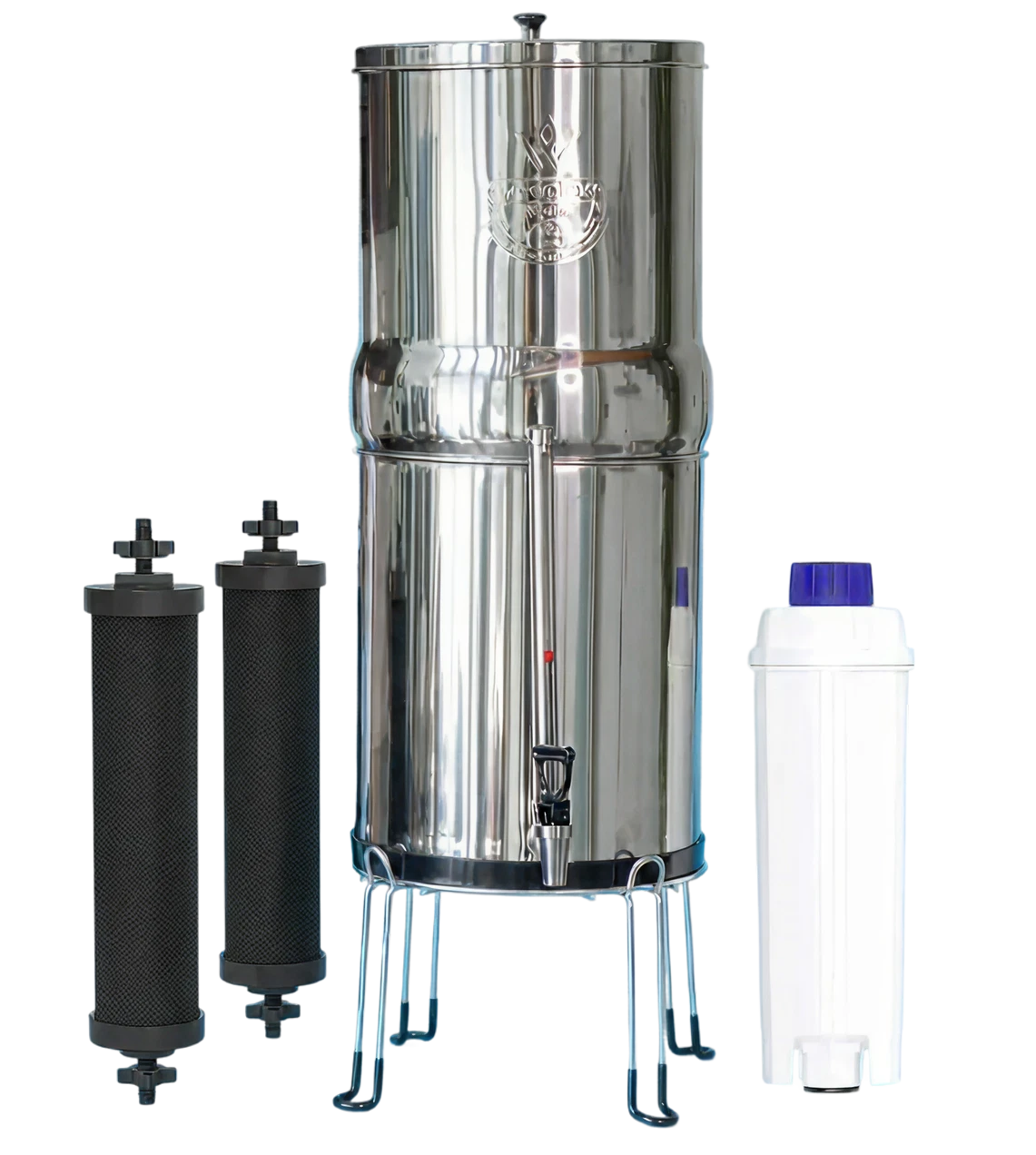
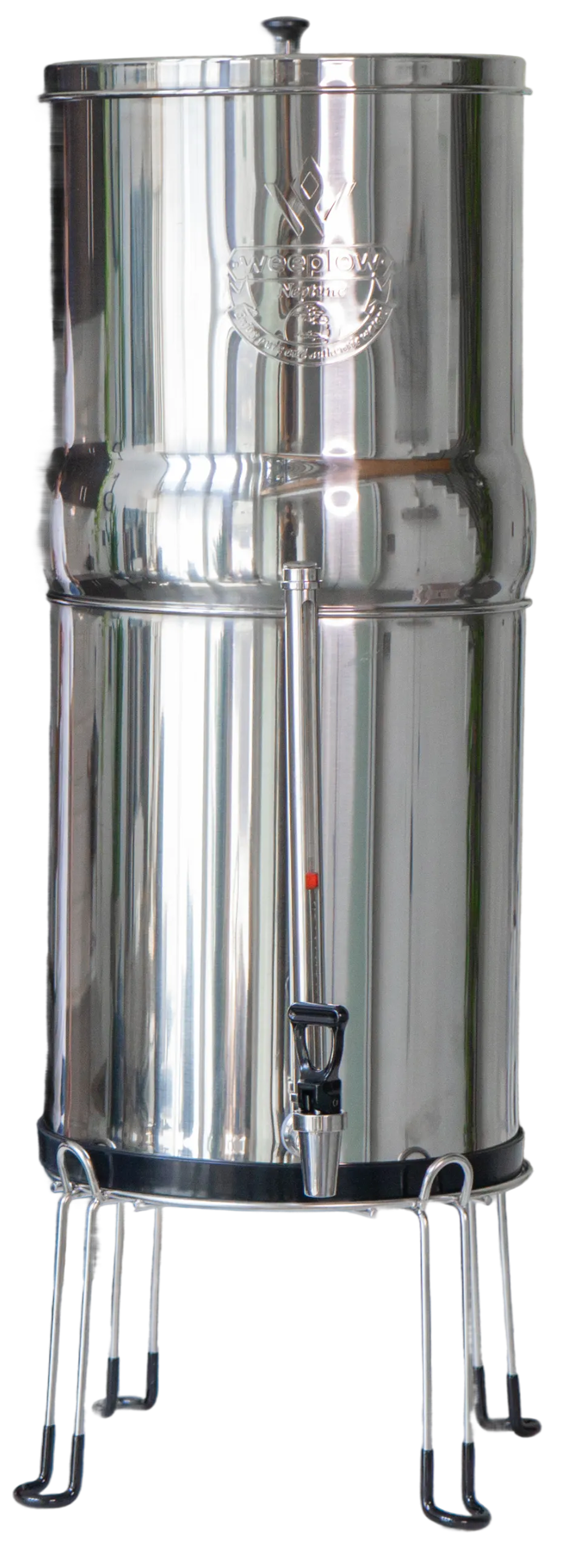
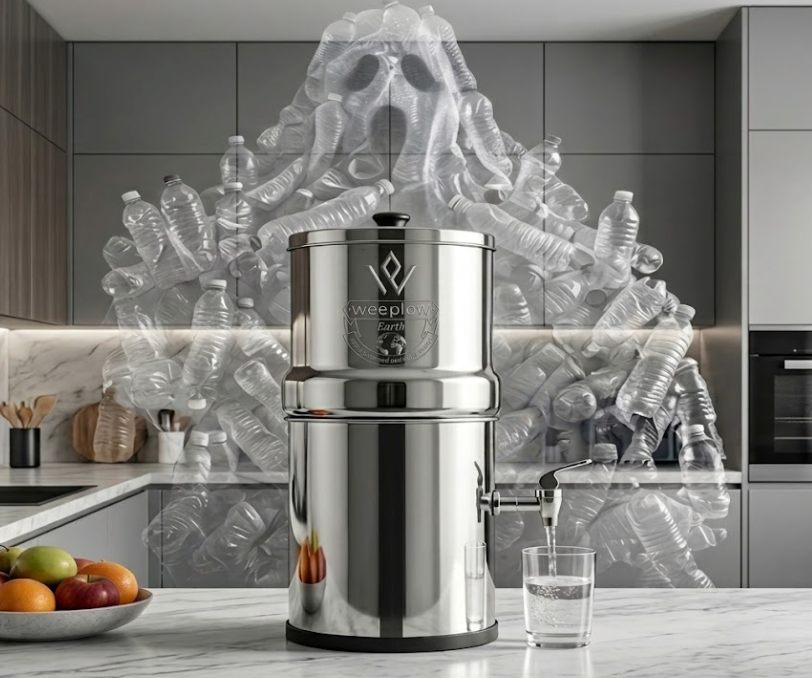
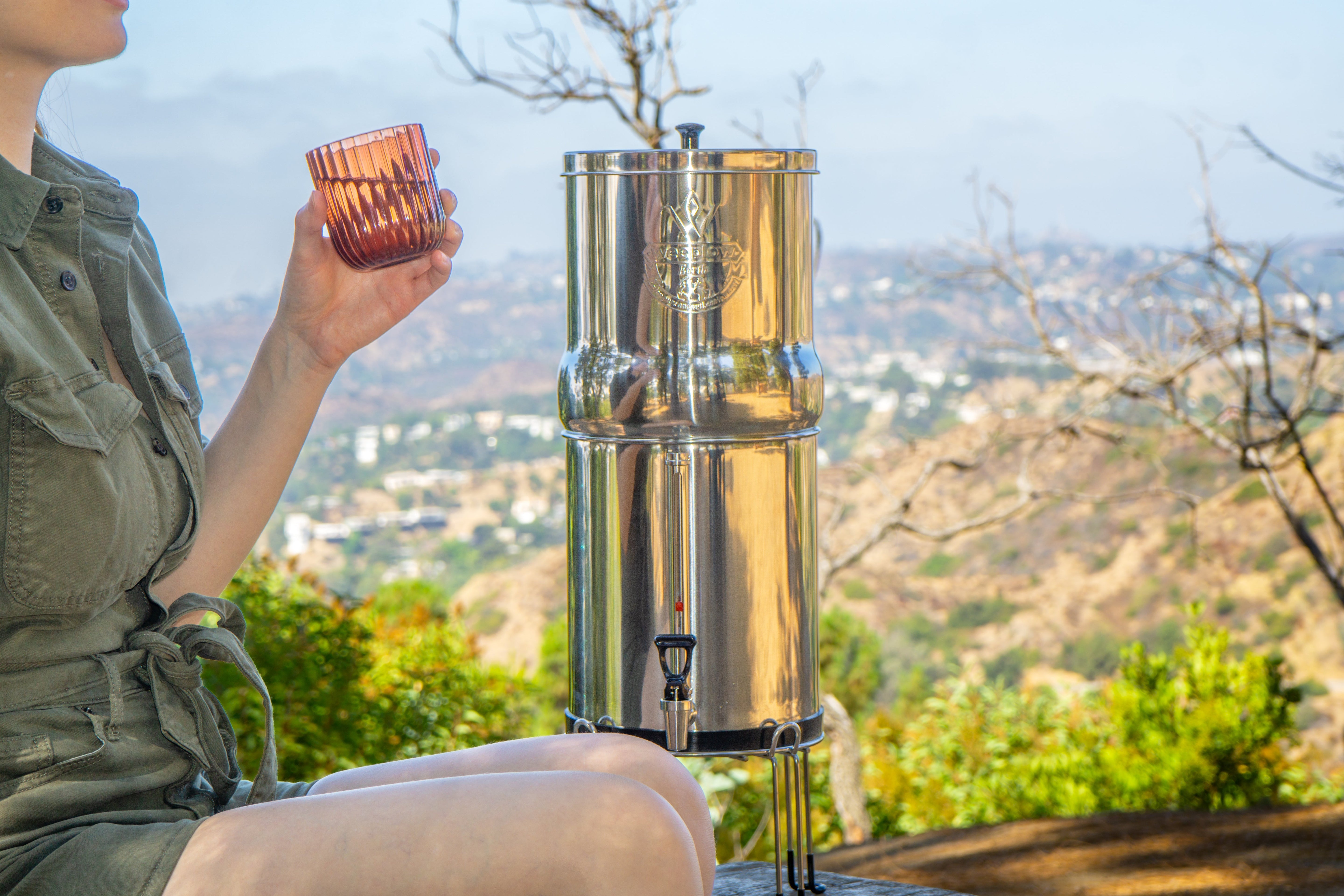
To avoid ingesting microplastics, it is advisable to buy a gravity filter. Combined with an activated carbon filter, it can reduce pollutants by 99%. It allows you to purify tap water, river water or non-drinking water. Capacity varies depending on the model, but several litres can usually be filtered at once.
You also reduce the purchase of plastic bottles, which too often end up in nature. Purified water can be used for animals and food preparation. Cleaning is simple, and you protect your health.

A historic agreement was reached at the UN to tackle plastic pollution on a global scale. Negotiations involving 175 nations led to a legally binding global treaty. It aims to reduce plastic waste and promote a circular economy. The Manta, due to be finalised by the end of 2024, will cover the entire lifecycle of plastic, from production to waste management.
It is essential to launch projects to remove plastic from our oceans and beaches, as it represents 85% of global marine pollution. Let us not forget that in 2019 plastics generated nearly 1.8 billion tonnes of greenhouse gas emissions. That represents 3.4% of global emissions.
There is also a seventh continent discovered in 1997. This floating rubbish continent is a vast mass of plastic waste drifting between Hawaii and California. At the same time, the AGEC law sets a target to eliminate all single-use plastic packaging by 2040 in France.
It is high time to act so future generations are not affected. Even the smallest effort can help reduce the risk of ingesting plastics in daily life.
Nitrates et méthémoglobinémie : quels risques pour l’eau du robinet ? Comprenez le lien entre ces deux éléments et ce que cela signifie pour votre eau au quotidien.
Researchers are increasingly studying the possible effects of chronic exposure to nitrates in drinking water. Here is what current research actually says about the potential risks associated with l...
Introduction Each year, a French household spends hundreds of euros on bottled water. It is carried home from the supermarket, stored in the kitchen, reassured by the image of mountains on ...
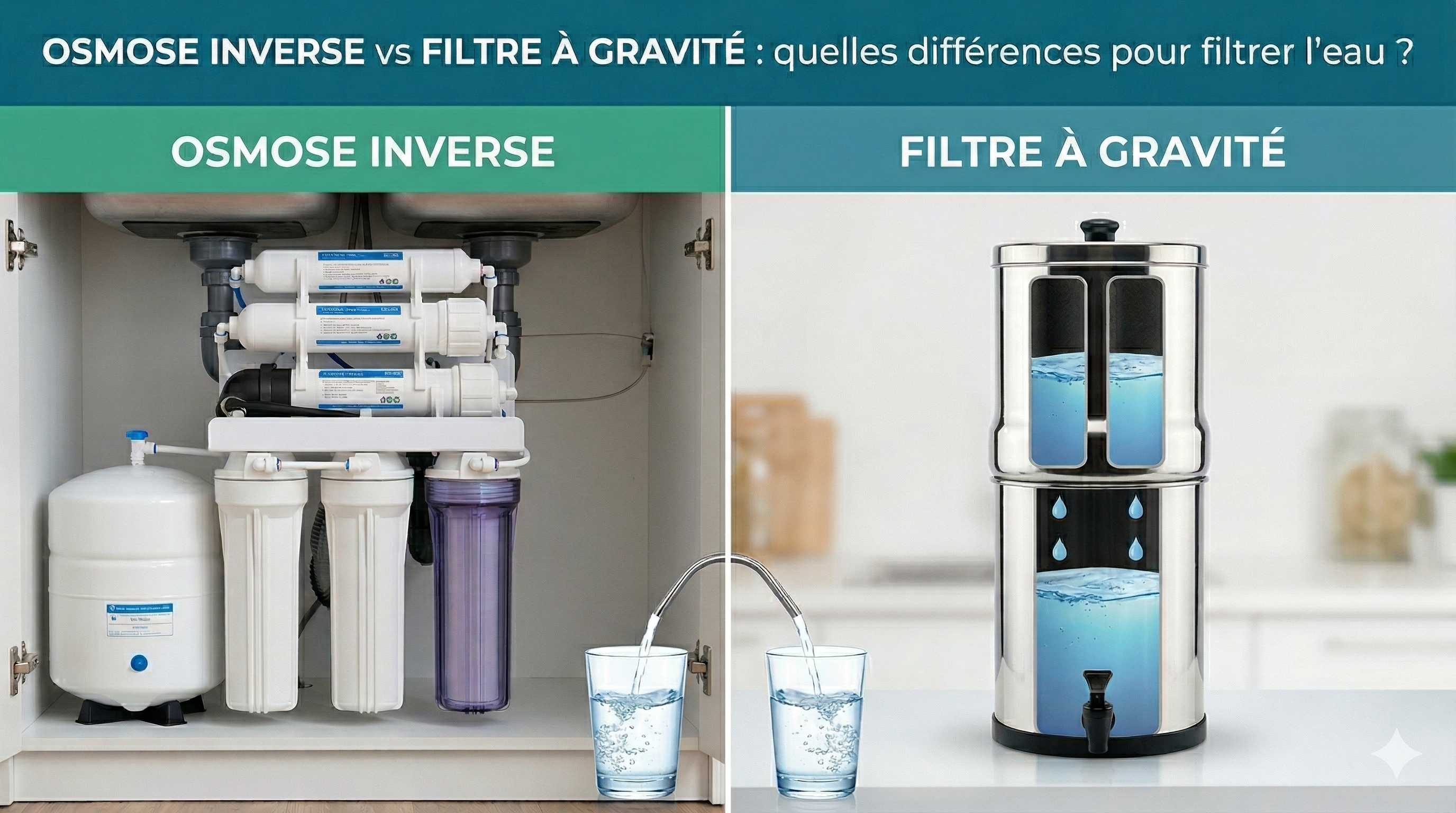
Reverse osmosis or a gravity filter: what are the differences when filtering drinking water? Discover how these two technologies work, along with their advantages and limitations for reducing conta...
Tap water is often treated to make it drinkable, but it can still contain traces of pollutants. These may include chlorine, pesticides, nitrates and pharmaceutical residues. These substances can ca...