


Anweisung zum Abkochen von Wasser: Ursachen, Risiken und Lösungen. Verstehen Sie, wann und warum diese Empfehlungen ausgesprochen werden und wie Sie darauf reagieren sollten.
Your Cart
(0 products)
Your cart is empty
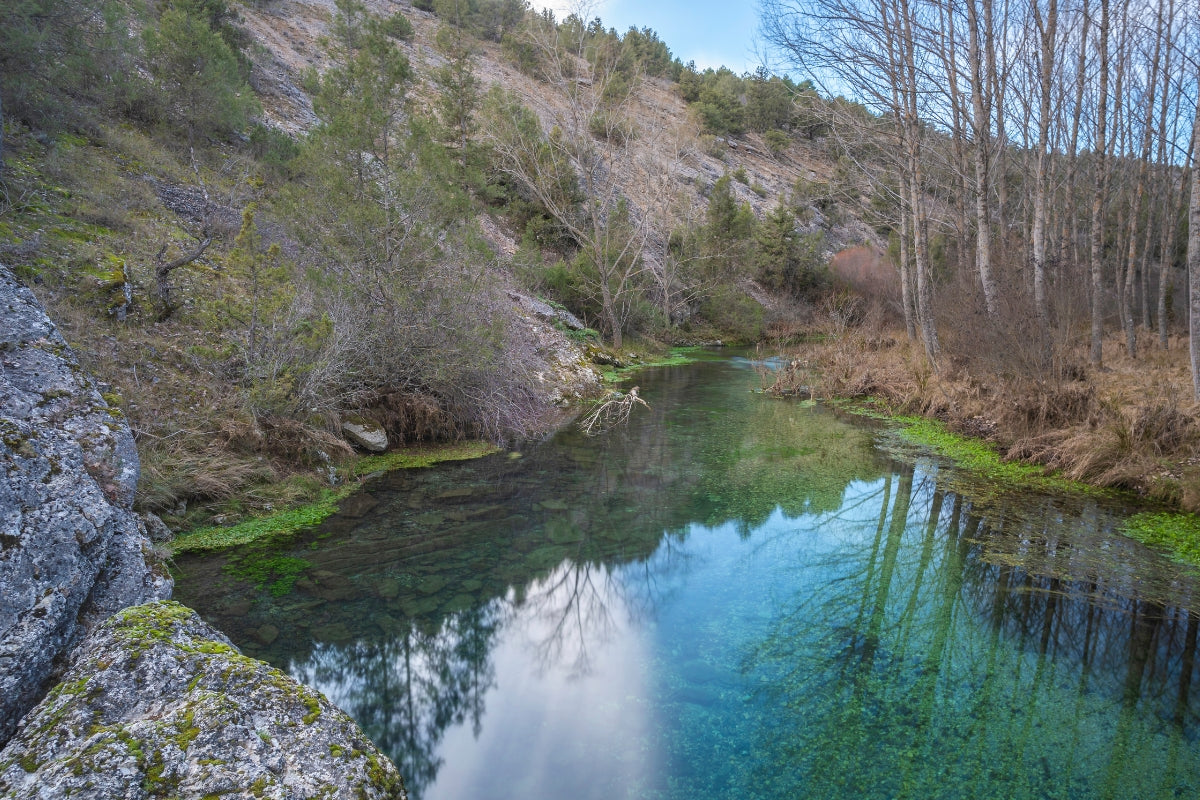
Deep within British aquifers, billions of litres of fresh water are extracted each year by multinational companies such as Nestlé and Coca-Cola. These giants draw on precious underground reserves with the aim of turning natural resources into bottled water for a lucrative global market. But at what cost?
As regions such as Vittel in France or Speyside in Scotland become key centres of this activity, concerns continue to grow. Why do these practices, governed by regulations often viewed as insufficient, raise so much concern? Researchers are issuing increasing warnings about environmental risks. The impact on groundwater reserves, potential contamination and pressure on these vital resources are prompting serious questions.
Between large-scale water treatment, the distances travelled in production and sales, and the condition of aquifers themselves, the reality is complex. Is it time to rethink these practices in order to protect a resource that is both essential and increasingly scarce?
An aquifer is a vast natural reserve of fresh water located beneath the earth’s surface. These underground layers store and filter rainwater that gradually seeps through rock over time. These water reservoirs play an important role in the natural treatment of raw water, helping supply wells, springs and public water networks with high-quality water.
Aquifers come in several forms:
Scientifically, these underground reserves are an essential part of the water cycle, but they are also fragile resources.
Aquifers provide a significant share of the world’s drinking water, whether for human consumption, treatment plants or manufacturing processes. They help protect public health by naturally filtering raw water, reducing bacteria and contaminants. They also regulate water systems, reduce flood risk and support ecosystems that depend on their mineral content.
However, exploiting freshwater reserves carries major risks. When overused, these reservoirs can become depleted, causing ecological imbalance, drought and declining water quality. Fragile areas, especially those near major bottled water brands, face growing pressure because of the volumes extracted for products such as Hépar or Perrier.
Protecting underground reserves means preventing health and environmental risks on a large scale. This requires effective regulation and sustainable management that considers both local communities and nature itself.

British aquifers, which act as underground freshwater stores, play a vital role in drinking water supply and ecosystem balance. Their natural recharge, a process that can take decades or even centuries, is now threatened by increasing industrial extraction for bottled water and by longer drought periods linked to climate change.
Available data suggests that heavy extraction by groups such as Perrier or Nestlé often exceeds the natural regeneration capacity of groundwater reserves in certain parts of the UK.
This situation is intensified by prolonged drought, which reduces the surface water needed to replenish aquifers.
Scientific investigations indicate that aquifer exploitation directly affects both the quality and quantity of available water.
Tools such as stronger monitoring networks could support more accurate control of extraction rates. Regional quotas based on actual recharge capacity should also be considered.
These measures, combined with reduced dependence on plastic bottles and greater public awareness, could help secure these strategic reserves for future generations.
The UK bottled water market is large and profitable, as in many countries around the world. According to Zenith Global, five companies control 83% of the sector.
Products in this market are divided into three categories:
Large corporations draw from British reserves to meet growing global demand for bottled water.
These large-scale withdrawals concentrate access to the highest-quality resources, prompting criticism over private control of a shared natural asset.
British freshwater reserves play an essential role in supplying communities and regulating ecosystems. These underground stores are now under intense pressure.
During the summer of 2022 in Wales, farmers in Ludchurch faced water restrictions while Nestlé reportedly continued extraction.
In this strategic sector, balancing lawful practices with sustainable management is essential to avoid resource capture that could harm future generations.
Microplastics in bottled water are receiving growing attention, but their indirect impact on groundwater reserves remains less explored.
Recent investigations highlight a major environmental issue: plastic waste from bottled water may contaminate aquifers through gradual infiltration.
Landfills containing bottled water waste can quietly spread microplastics. Caps and bottle fragments exposed to rainfall and underground pressure release particles that can enter groundwater systems.
Areas near landfill sites or coastal zones vulnerable to seawater intrusion may face higher risks.
Studies in Europe suggest that aquifers in some islands and coastal regions show traces of plastic pollution. In the UK, researchers suggest that groundwater beneath major landfill areas could be affected by this slow but persistent contamination.
A recent New Zealand study found that plastic pollution, combined with rainwater infiltration, can reach deep aquifer layers. While not yet universal findings, they raise important concerns about the long-term sustainability of freshwater reserves.
To protect groundwater quality, several actions are needed:
British aquifers are essential freshwater reservoirs for both nature and future generations. Preventing plastic pollution is vital to maintain environmental standards and avoid serious health risks.
In some regions, local communities describe a clear injustice. Lacking sufficient access to essential water resources, they may turn to bottled products drawn from the same reserves that should meet their basic needs.
This issue, widely documented in Spain and Latin America, also appears in the UK. In such areas, concessions granted to major multinational firms can worsen shortages and deepen inequality.
Pedro Arrojo-Agudo, UN Special Rapporteur, has warned about this trend. He notes that while bottled water may represent a modest share of extracted volumes, it often takes the highest-quality water.
This can disadvantage public drinking water systems and increase economic and environmental dependence on bottled products.
Extraction licences granted by the Environment Agency are intended to include strict conditions to protect resources and the environment.
This perceived lack of rigour fuels growing debate. How can these practices be aligned with the public interest and protection of freshwater reserves? The dominance of foreign-owned groups in the UK natural mineral water sector also raises questions.
Some companies, such as Highland Spring, voluntarily limit extraction. Initiatives such as the Alliance for Water Stewardship (AWS) promote environmental certification for responsible water management.
Consumer choices can also influence the market. Choosing local brands and reducing bottled water purchases in favour of tap water can have a meaningful impact.
Education campaigns can improve awareness of water issues. Involving local communities in licence decisions and strengthening regulation are important avenues to explore. Greater transparency and fairer quotas could help limit abuse by large corporations.

Faced with large-scale extraction, every stakeholder, from consumers to governments, has a role to play. The future of water resources depends on balancing economic development with environmental protection. By rethinking our choices and demanding fairer policies, we can preserve these underground treasures for future generations.
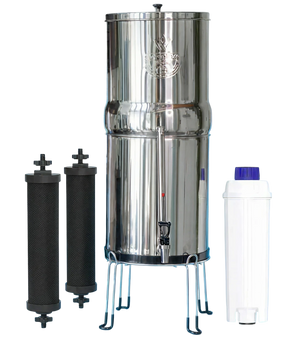
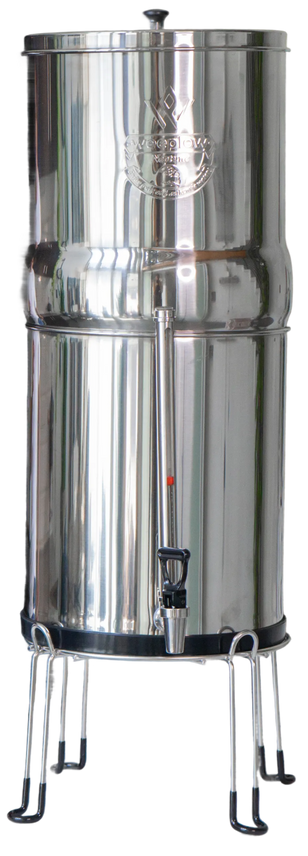
It is entirely possible to move away from bottled spring water sold in plastic. In France, several scandals have already emerged, particularly involving Nestlé. The company faced criticism over the use of prohibited treatment methods. You can enjoy high-quality water by using tap water with a gravity filter from Weeplow. The principle is simple: fill the upper chamber with tap water, allow it to filter through, and collect clean water below.
In France, this type of filtered water is becoming increasingly popular because it reduces plastic pollution, saves money and removes heavy metals, pesticides and other contaminants. A gravity filter can reduce their presence by up to 99.99%.
Anweisung zum Abkochen von Wasser: Ursachen, Risiken und Lösungen. Verstehen Sie, wann und warum diese Empfehlungen ausgesprochen werden und wie Sie darauf reagieren sollten.
Nitrate im Leitungswasser sind häufig, aber unsichtbar. Erfahren Sie mehr über ihre Herkunft, mögliche Risiken und Lösungen, um Ihr Wasser im Alltag besser zu verstehen.
Nitrate sind ohne Analyse schwer nachzuweisen. Erfahren Sie, wie sie ins Leitungswasser gelangen, warum sie überwacht werden und wie Sie Ihr Wasser einfach testen können.
Les nitrates peuvent être présents naturellement dans l’eau, mais certaines activités, notamment agricoles, peuvent augmenter leur concentration. Découvrez la limite applicable en France, comment v...
Nitrat kommt natürlich in Böden, Pflanzen und Wasser vor. Erhöhte Konzentrationen können jedoch insbesondere im Grundwasser auftreten. Erfahren Sie, wie der Nitratgrenzwert in Deutschland geregelt ...