


Nitrat kommt natürlich in Böden, Pflanzen und Wasser vor. Erhöhte Konzentrationen können jedoch insbesondere im Grundwasser auftreten. Erfahren Sie, wie der Nitratgrenzwert in Deutschland geregelt ...
Your Cart
(0 products)
Your cart is empty
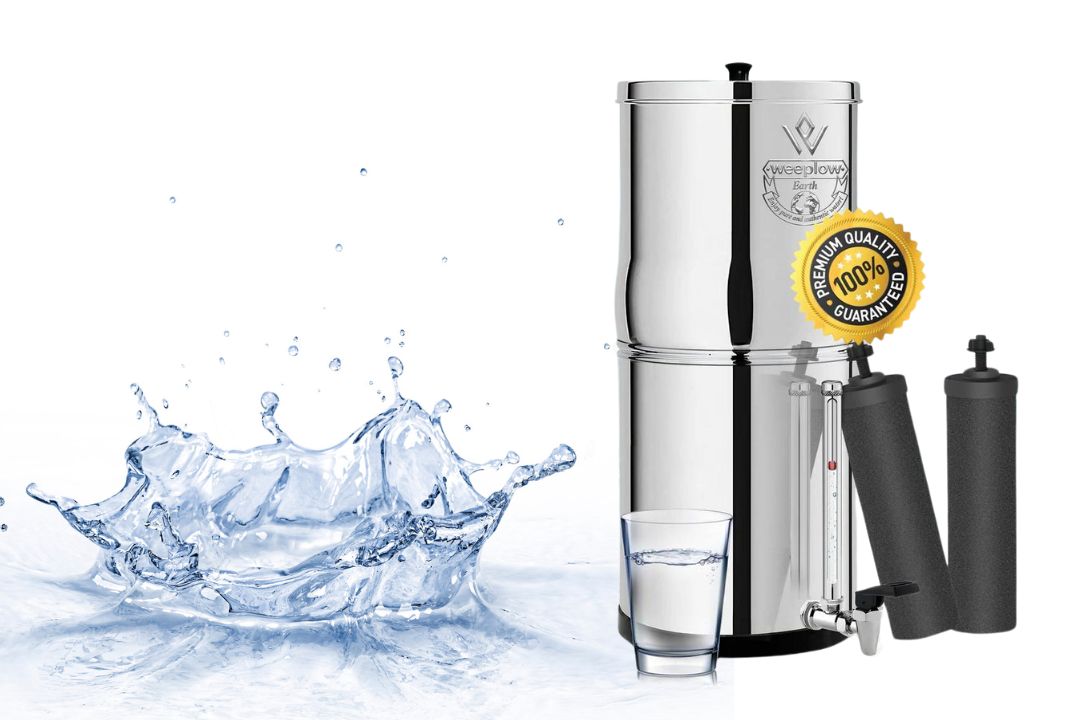
A gravity filter is a simple, self-contained water purification system that uses gravity to pass water through one or more filter cartridges. This is how it removes contaminants that may affect your health.
A gravity filter differs from a standard water filter that uses a pump or mains pressure to force water through the filters. The range of contaminants it removes is also very broad. This article explains everything you need to know about gravity filters, from their purpose to how they work, as well as how to choose the right one.
Gravity filters are commonly used to treat rainwater, spring water, or tap water when its quality is uncertain. They are therefore useful both at home and in remote areas, as well as during hiking trips and emergency situations.
Gravity filters offer a simple and effective solution for purifying drinking water at home. Water filtered through a gravity system is often remineralised, which improves its taste for preparing tea and other hot drinks.
In the kitchen, water from a gravity filter is:
In many remote parts of the world, access to safe and reliable drinking water remains a major challenge. Gravity filters offer a practical, effective and affordable solution for purifying water.
Untreated water sources may contain various pathogens such as bacteria, viruses and parasites. These can cause a wide range of serious illnesses, including diarrhoea, cholera and typhoid.
By improving access to safe drinking water, gravity filters help significantly reduce waterborne diseases, contributing to better overall health and wellbeing in communities.
Whether during a natural disaster, infrastructure failure or outdoor adventure, access to safe drinking water becomes essential. In these situations, gravity filters are valuable tools for making water safe to drink.
Many gravity filters are compact and lightweight, making them ideal for hiking, camping and emergency use.
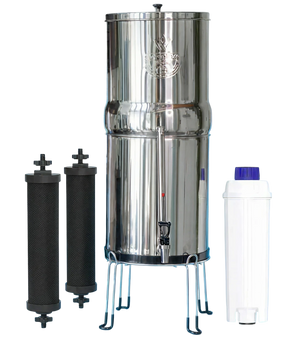
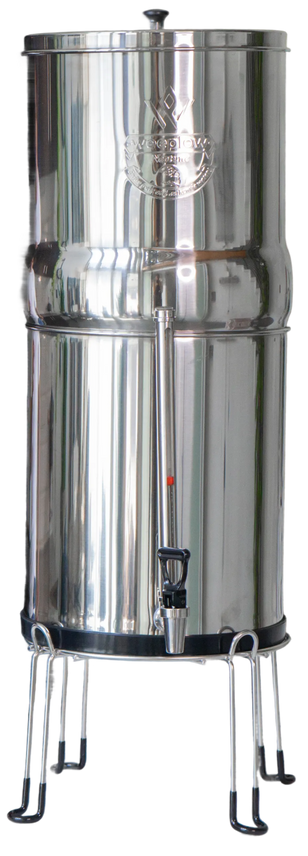
A typical gravity filter consists of two stacked compartments. Untreated water is poured into the upper chamber, then flows through one or more filters before being collected in the lower chamber, ready for consumption.
Gravity filters use a combination of techniques to remove a wide range of contaminants from water, including:
Unlike systems that push water through filters under high pressure, gravity filters rely on a slower process that increases contact time between water and the filter media. This approach improves contaminant removal.
Filtering materials may include:
Each material has specific filtration properties, allowing a wide range of impurities to be targeted.
By combining these techniques, gravity filtration systems provide a complete solution for purifying water from different sources, reducing:
Gravity filters come in different designs depending on the number of reservoirs and filtration technologies used.
Some gravity filters are designed with a single reservoir for portability, while others use two reservoirs for more efficient filtration.
These are designed for easy outdoor use. Simply hang the filter using a strap and open the tap to let water flow. A hydration tube is often included for filling bottles, and the flow can be controlled using an on/off valve.
These are the most common systems. They typically include two stacked chambers and usually contain two filter cartridges, although some models can hold three or four depending on water quality.
Untreated water is poured into the upper chamber, while filtered water is collected in the lower chamber for easy access.
Gravity filters can also be categorised by the materials used to capture and remove contaminants.
Activated carbon attracts and retains organic impurities, chemicals, odours and unpleasant tastes through adsorption. However, it is less effective against bacteria and viruses. This is why at Weeplow, we combine it with other technologies in our O’Pure 2.
Ceramic filters contain tiny pores that physically trap bacteria, protozoa and suspended particles. They are effective against micro-organisms, durable and resistant to contamination.
Unlike activated carbon filters, which require priming before use, ceramic filters are ready to use straight out of the box. This makes them particularly convenient, especially in emergency situations.
However, they are less effective at removing chemicals and odours, and the flow rate may be slower.
These systems use a porous membrane to remove contaminants, providing precise filtration against micro-organisms and smaller particles.
Membranes can be:
The pore size determines which contaminants are removed. With proper maintenance, membranes can last for several years.
Gravity filters offer many benefits for water purification at home or on the go, including:
You can explore our dedicated article to discover all the advantages of gravity filtration.
Choosing a gravity water filter depends mainly on your daily water needs, intended use and budget.
The size of a filter determines how much water it can hold at once. This is especially important for systems with a reservoir, such as gravity filters.
Here are a few key factors to consider:
The more water you use, the larger the capacity should be. For larger households or frequent cooking use, choose a model with a bigger reservoir.
The World Health Organization recommends an average intake of around 2 litres of water per person per day. For a family of four, this represents roughly 8 litres of drinking water daily.
This is an estimate and may vary depending on climate, activity levels and personal habits.
If you plan to use your filter daily, a larger capacity is recommended. For occasional use, a smaller model may be sufficient.
If you live in an area with frequent water interruptions, a larger system (for example, 22 litres) can help ensure a reliable supply.
The more people using the filter, the larger the capacity needed. A 2 to 4 litre system may be sufficient for one person, while a household of four typically requires 5 to 8 litres.
For larger groups or intensive use, consider systems of 10 litres or more. For example, our largest gravity filter has a capacity of 11 litres, with larger models planned in the future.
When choosing a fixed system, consider where it will be placed—on a worktop or shelf. Allow enough space for refilling and replacing filters. Some models include non-slip bases or stainless steel stands.
If space is limited, a compact gravity filter with a smaller reservoir may be more suitable. For example, you could consider a 5.6-litre system.
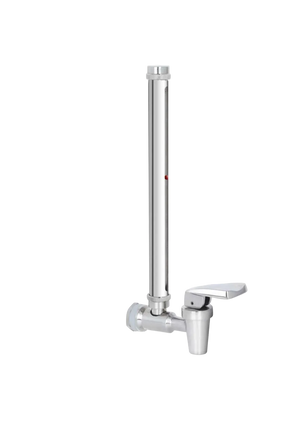
If you want additional features such as a tap with a water level indicator or a raised stand, make sure the chosen model fits comfortably in your space without getting in the way.
Your choice will also depend on how you plan to use the filter. If your tap water is already of good quality, a simple activated carbon filter may be enough to remove chlorine taste, impurities and chemicals.
If your water source is uncertain or comes from a private well, consider a multi-stage system including an O’Pure 2B filter. This is recommended for removing arsenic and fluoride.
Planning to go camping or hiking? In that case, a lightweight, portable gravity filter is essential. It can easily be hung from a tree to create a convenient drinking water point.
Flow rate is an important factor when choosing a system. It refers to how much water can be filtered over a given period, usually measured in litres per hour.
If your household uses a large volume of water, or if you rely on the filter for cooking, a higher flow rate helps avoid waiting times.
To estimate your needs:
The result gives you the minimum required flow rate. For example, 8 litres per day over 8 hours requires at least 1 litre per hour.
At Weeplow, our dual-filter systems offer flow rates of up to 3.8 litres per hour, suitable for most everyday uses.
The price of a gravity filter typically ranges from €130 to €500 depending on:
Regular maintenance is essential to ensure the quality of your drinking water. Check your system frequently for debris, sediment or damage that could affect performance.
Cleaning frequency depends on usage and water quality, but monthly cleaning is generally recommended. Clean more often if flow rate decreases.
To clean your filter:
Wipe the exterior regularly with a damp cloth to remove dust and marks.
You now have a clear understanding of what a gravity filter is and why it can be so useful, both at home and on the move. With many models available, you can choose one that suits your needs and start benefiting from a more sustainable way to access clean drinking water.
At Weeplow, we offer a range of filtration systems to suit different needs and budgets. Our technology can reduce up to 99.999% of harmful contaminants in water.
Browse our online shop to find the right solution for your home.
Nitrat kommt natürlich in Böden, Pflanzen und Wasser vor. Erhöhte Konzentrationen können jedoch insbesondere im Grundwasser auftreten. Erfahren Sie, wie der Nitratgrenzwert in Deutschland geregelt ...
Nitrate can occur naturally in water, but higher concentrations can come from sources such as agriculture and wastewater. Learn how drinking-water limits work, where nitrate comes from, how to test...
Nitrates et méthémoglobinémie : quels risques pour l’eau du robinet ? Comprenez le lien entre ces deux éléments et ce que cela signifie pour votre eau au quotidien.
Researchers are increasingly studying the possible effects of chronic exposure to nitrates in drinking water. Here is what current research actually says about the potential risks associated with l...
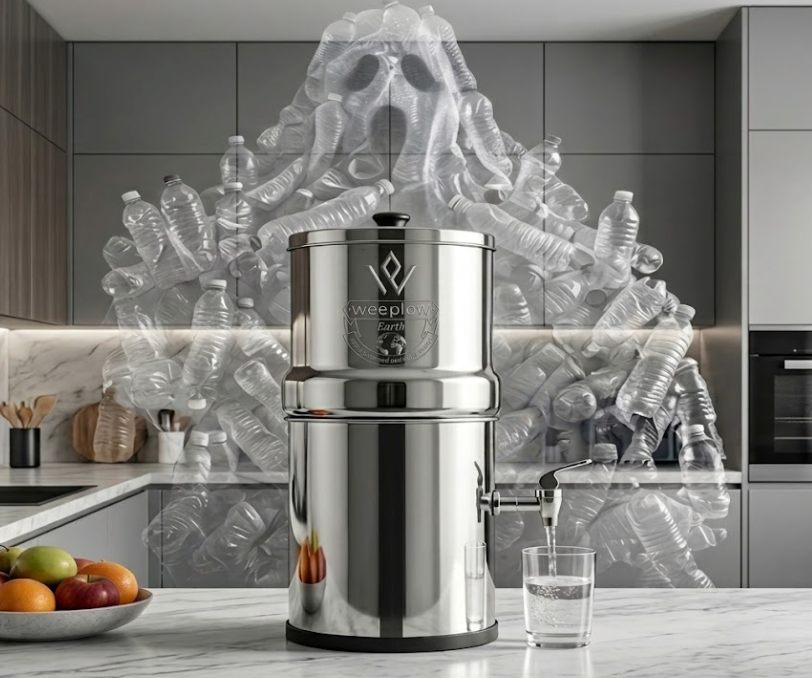
Introduction Each year, a French household spends hundreds of euros on bottled water. It is carried home from the supermarket, stored in the kitchen, reassured by the image of mountains on ...