


Erfahren Sie, wie Nitrat ins Trinkwasser gelangt, welche Grenzwerte gelten und was aktuelle Studien über mögliche Gesundheitsrisiken sagen.
Your Cart
(0 products)
Your cart is empty
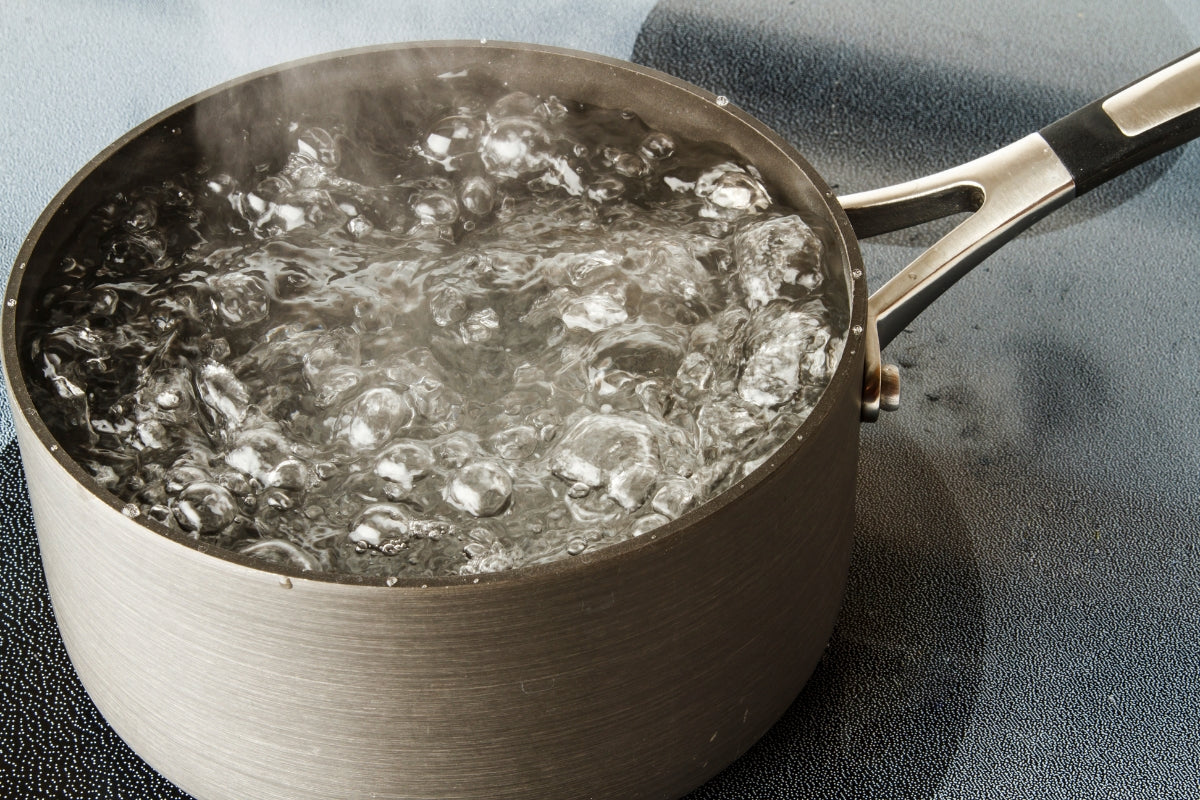
Imagine you are hiking far from civilisation with only one available water source. But is water taken from a river or lake automatically safe to drink? Is a single minute of intense heat enough to eliminate bacteria, heavy metals, viruses and other harmful contaminants?
Boiled water may seem like a universal solution for making water safe to drink. But is it really the best disinfecting method? Which contaminants can resist boiling?
Between opinions on boiling as a disinfection method, alternatives such as gravity filters or chlorine, and the precautions required, here is everything you need to know to stay hydrated safely, even at altitude or while travelling.
Drinking water contaminated with bacteria and germs is not a risk to take lightly. Invisible micro-organisms such as Escherichia coli or the agents responsible for hepatitis can turn a simple sip into a threat to your health, even at low levels.
These infections can lead to serious illnesses that affect both your wellbeing and your body over the long term.
This is a major public health concern, which is why killing bacteria remains essential to prevent contamination and ensure that every drop of water you drink is safe.
It is one of the oldest and simplest methods, but is it effective for removing bacteria, viruses and parasites?
Boiling water, when done correctly, kills some biological contaminants. Your water becomes safer for consumption. However, this technique is not foolproof.
Heat causes the proteins of harmful micro-organisms to break down. This process prevents them from surviving and reproducing. Thanks to this method, most bacteria, including resistant strains such as Escherichia coli, are destroyed.
You significantly reduce the risk of contamination. Boiling is therefore a recommended method for disinfecting water when health safety is at stake. This method is simple, but not without risk, as one mistake may allow bacteria to continue spreading. This is less likely when you choose to filter your water.

Generally, 100°C is enough to remove most bacteria. To ensure full elimination, it is advisable to keep the water at a rolling boil for at least one minute. This is effective even against more resistant micro-organisms.
Be careful if you are in the mountains, as the boiling point is lower at altitude. In that case, it is recommended to extend the boiling time.
Water Temperature |
Recommended Boiling Time |
Altitude |
Contaminants |
100°C |
1 minute (rolling boil) |
Up to 2,000 metres |
Sufficient to eliminate most bacteria, viruses and parasites. |
100°C |
3 minutes (rolling boil) |
Above 2,000 metres |
Recommended at high altitude where the boiling point is lower. |
90–95°C |
10 minutes |
Emergency situations with lower heat |
Extend the duration to ensure effective removal of pathogens. |
85°C |
30 minutes |
Very low pressure or laboratory use |
Generally used in laboratories, not recommended for everyday use. |
However, temperature control is essential, as a difference of just a few degrees can be risky.
Be cautious with this method, as not all contaminants are removed by boiling. Heavy metals and chemical products are clearly not affected by heat. Other processes are therefore recommended, such as reverse osmosis or water purifiers.
It is often the first disinfection method that comes to mind. Whether you are travelling in a remote region or tap water suddenly becomes unsafe, you may choose this simple solution.
Here are the most common situations where boiling water is necessary:
Boiling is often recommended because of its simplicity, as you only need a stove. You can also use it in situations where you are not drinking the water directly, such as cooking, showers or washing.
However, if you want to reduce all risks, the best method is to buy a gravity filter. It requires no electricity and reduces up to 99% of contaminants, including heavy metals.
To purify water, there are simple and more advanced solutions. Choose the one that best meets your needs and is easy to use, whether at home or while travelling.

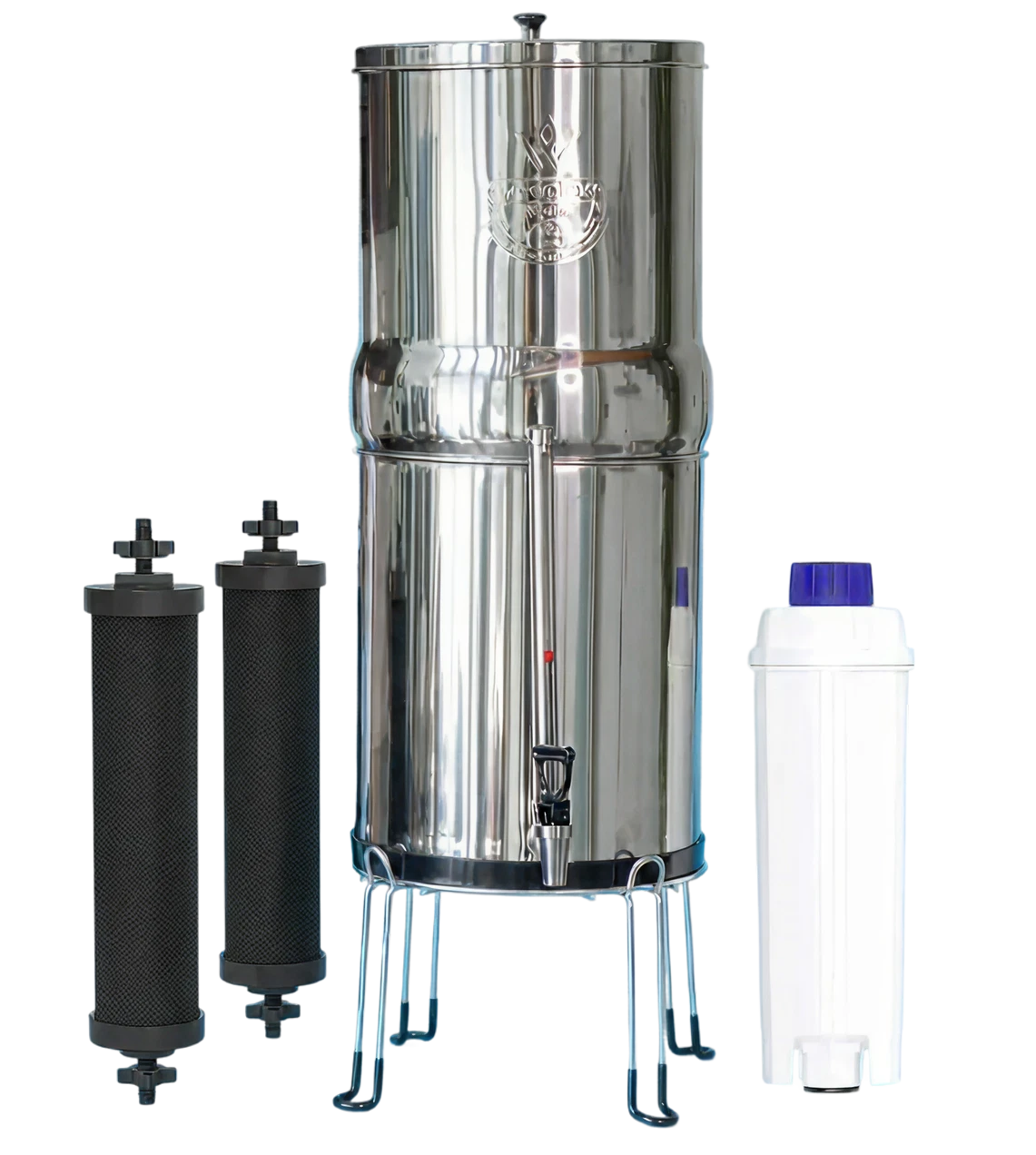
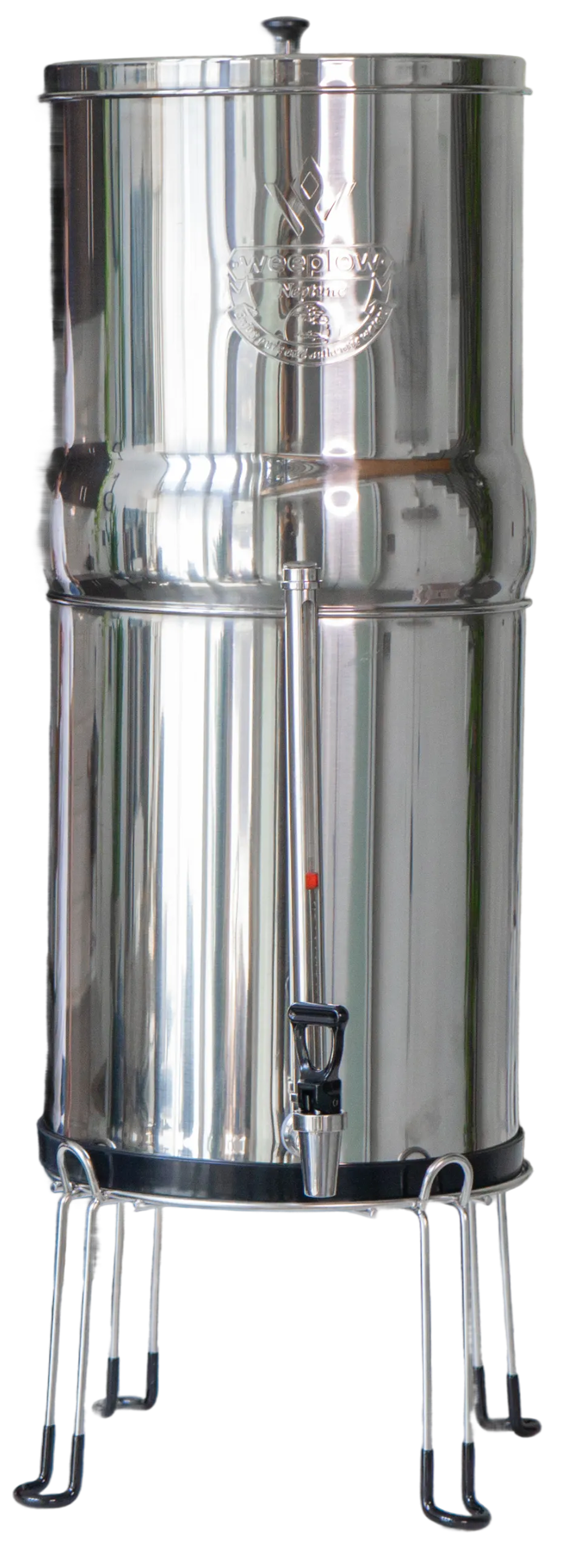
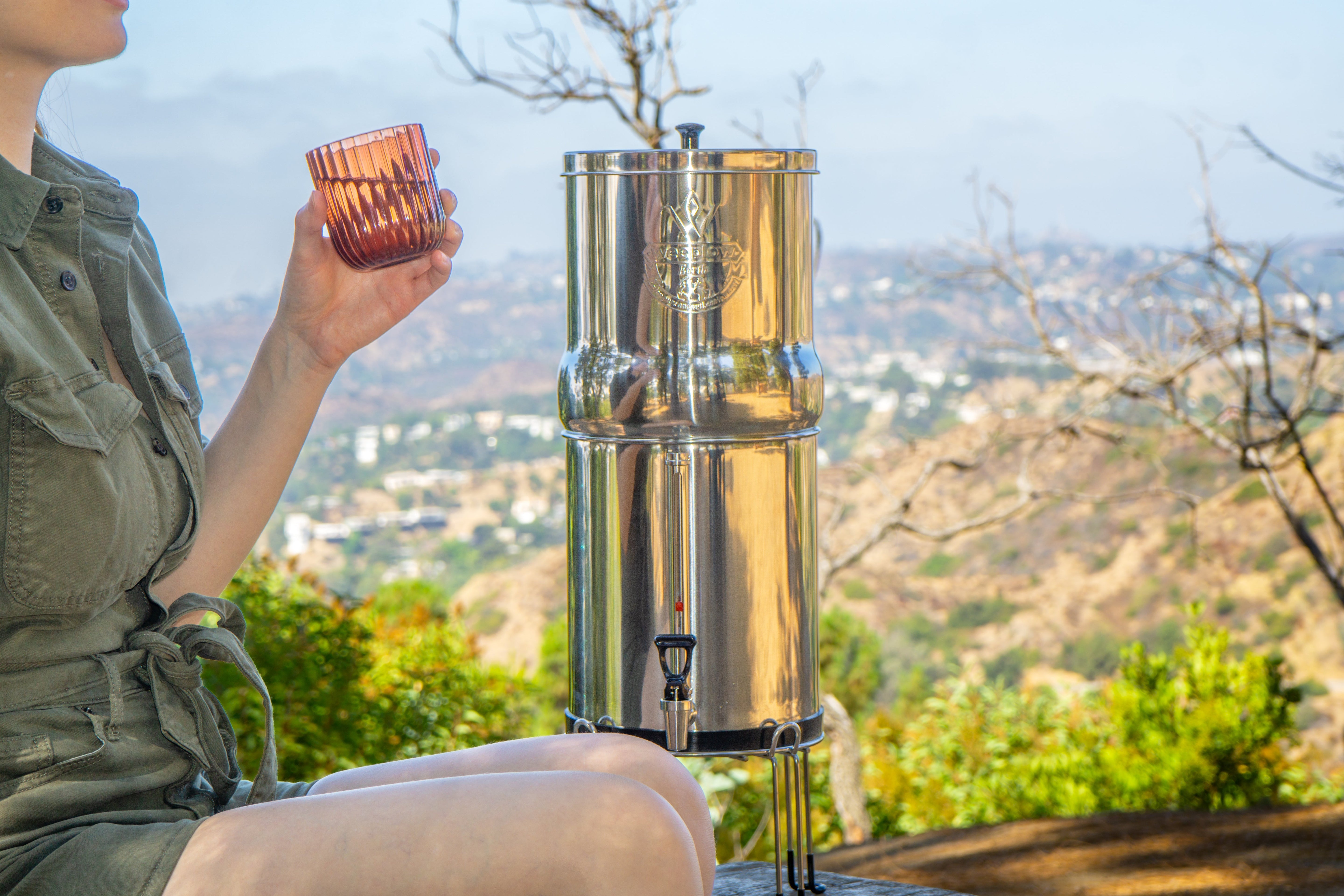
At Weeplow, we recommend gravity filters. They are an excellent alternative for removing bacteria from water and even heavy metals. These systems use gravity to pass water through activated carbon filters, trapping contaminants without the need for electricity.
Water purification tablets based on chlorine or iodine are another useful method. They are lightweight, easy to use and practical while travelling.
By adding them to natural water, you remove biological contaminants within minutes, but you are using chemicals. By contrast, gravity filters do not add substances to your water to disinfect it.
Ultraviolet treatment is often popular with travellers. UV pens emit ultraviolet light and neutralise micro-organisms, viruses and bacteria by damaging their DNA. This method is quick, but uncertain. It is not always the best option for removing chemical contaminants, germs or heavy metals.
Some water sources in France and around the world are not safe to drink, which is why purification matters. Although boiling can be useful in certain situations, especially when pollution levels are very low, filtration is often the better option.
You keep the beneficial minerals for your health while reducing pesticides. In addition, the water will not have a bleach-like taste, even when using water taken through sediment pores.
The effectiveness of gravity filters is well established. This method has existed for a long time and remains one of the best ways to reduce up to 99% of pollutants and heavy metals present in water.
Erfahren Sie, wie Nitrat ins Trinkwasser gelangt, welche Grenzwerte gelten und was aktuelle Studien über mögliche Gesundheitsrisiken sagen.
Researchers are increasingly studying the possible effects of chronic exposure to nitrates in drinking water. Here is what current research actually says about the potential risks associated with l...
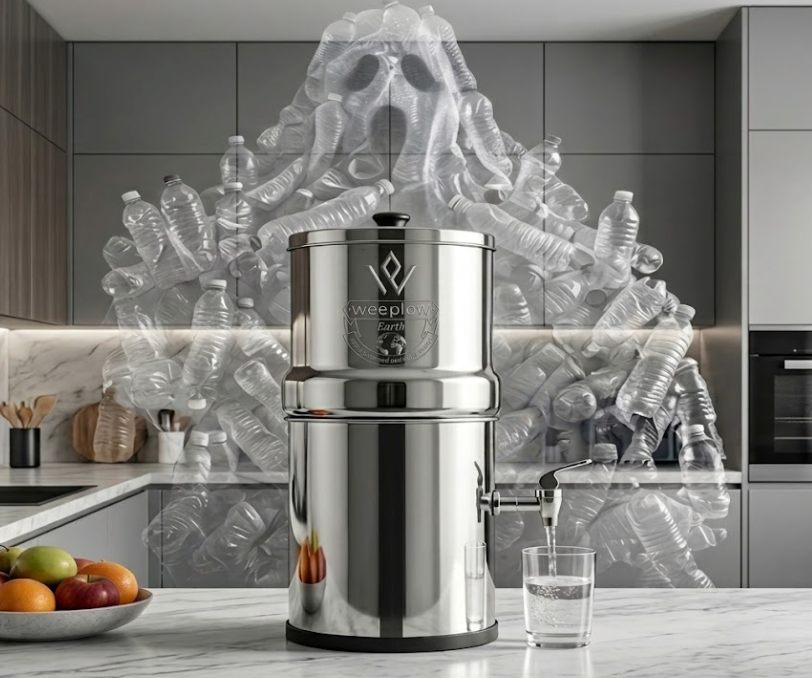
Introduction Each year, a French household spends hundreds of euros on bottled water. It is carried home from the supermarket, stored in the kitchen, reassured by the image of mountains on ...
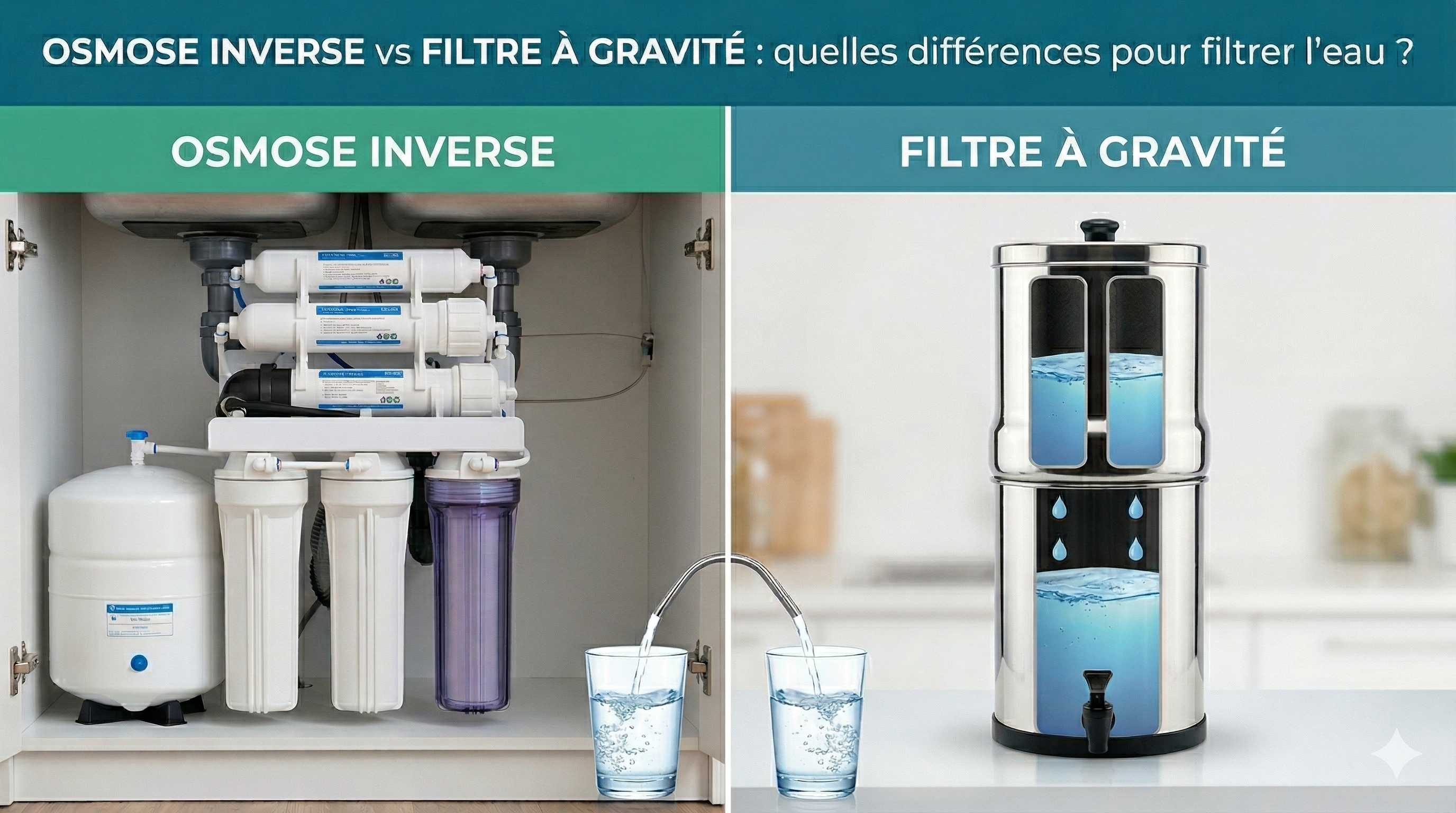
Reverse osmosis or a gravity filter: what are the differences when filtering drinking water? Discover how these two technologies work, along with their advantages and limitations for reducing conta...
Tap water is often treated to make it drinkable, but it can still contain traces of pollutants. These may include chlorine, pesticides, nitrates and pharmaceutical residues. These substances can ca...