



„Blausäugigkeit“ ist einer der Hauptgründe, warum Nitratwerte im Trinkwasser reguliert werden. So funktioniert es – und warum es auch heute noch wichtig ist.
Your Cart
(0 products)
Your cart is empty
Sauberes Trinkwasser ist für jeden Haushalt wichtig, aber die Wahl des richtigen Filtersystems kann verwirrend sein.
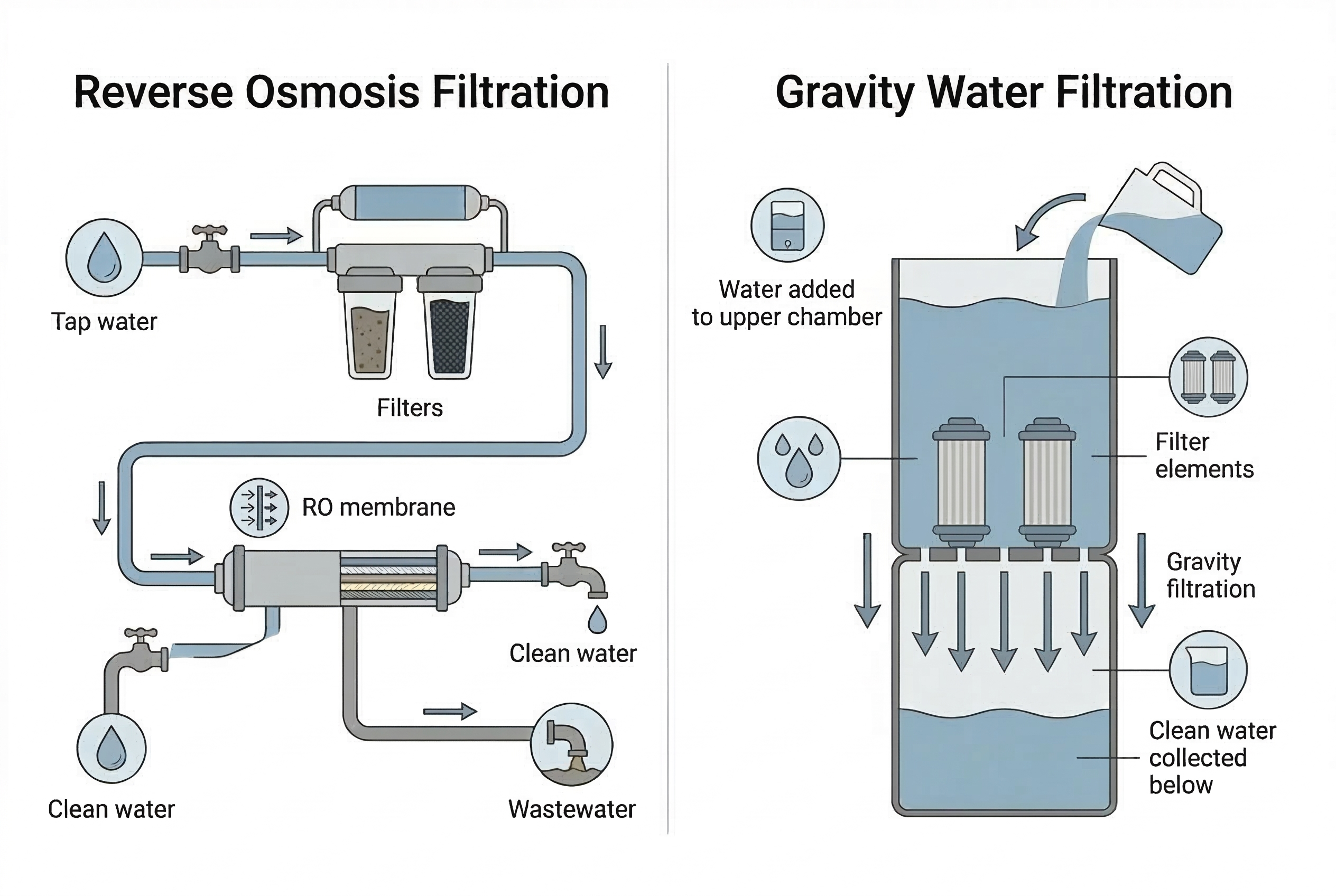
Umkehrosmose- und Schwerkraft-Wasserfilter sind zwei gängige Technologien zur Verbesserung der Trinkwasserqualität. Umkehrosmose-Systeme verwenden eine halbdurchlässige Membran und Wasserdruck, um gelöste Verunreinigungen zu entfernen, während Schwerkraft-Filtrationssysteme auf Aktivkohle und Hohlfaserfilter setzen, die ohne Strom oder Wasseranschluss funktionieren. Jede Methode entfernt Verunreinigungen auf unterschiedliche Weise und eignet sich für verschiedene Haushaltsbedürfnisse.
Beide Technologien können Verunreinigungen im Trinkwasser reduzieren, einschließlich Substanzen wie PFAS, Schwermetallen und bestimmten chemischen Schadstoffen. Sie unterscheiden sich jedoch erheblich in ihrer Funktionsweise, Installation und wie sie den Mineralgehalt im Wasser beeinflussen.
Das Verständnis dieser Unterschiede kann Ihnen helfen zu entscheiden, welches System besser zu Ihrem Zuhause, Lebensstil und Ihren Wasserqualitätsbedenken passt.
Die Bedenken hinsichtlich Verunreinigungen wie PFAS haben in den letzten Jahren zugenommen, wobei Untersuchungen ihre Präsenz in Trinkwasserquellen in vielen Ländern hervorheben. Wenn Sie verstehen möchten, woher diese Substanzen stammen, können Sie mehr in unserem Leitfaden lesen, der erklärt, wo PFAS im Wasser vorkommen.

Obwohl beide Systeme darauf abzielen, die Trinkwasserqualität zu verbessern, sind die Filtrationsprozesse grundlegend unterschiedlich.
Umkehrosmose (RO)-Systeme verwenden Druck, um Wasser durch eine halbdurchlässige Membran zu drücken. Diese Membran ist so konzipiert, dass sie eine breite Palette gelöster Stoffe entfernt, darunter Salze, Schwermetalle und einige chemische Verunreinigungen.
Da die Membran extrem fein ist, benötigen RO-Systeme oft mehrere Filtrationsstufen und müssen in der Regel auf der Arbeitsplatte oder unter der Spüle mit Wasseranschlüssen installiert werden.
Schwerkraft-Wasserfilter basieren auf einem viel einfacheren Prinzip: Die Schwerkraft zieht Wasser durch ein oder mehrere Filterelemente. Diese Filter kombinieren oft mechanische Filtration mit Aktivkohle, um Verunreinigungen zu reduzieren.
Da die Schwerkraft die Arbeit übernimmt, benötigen diese Systeme keinen Strom oder Sanitäranschluss und werden typischerweise als Tischfiltereinheiten verwendet.

| Merkmal | Umkehrosmose | Schwerkraft-Wasserfilter |
|---|---|---|
| Installation | Erfordert Installation von Sanitäranlagen | Keine Installation von Sanitäranlagen erforderlich |
| Stromversorgung | Benötigt oft Wasserdruck oder Pumpe | Kein Druck oder Strom erforderlich |
| Wasserabfall | Erzeugt während der Filtration bis zu 4 Liter Abwasser pro Liter gefiltertem Wasser | Kein Abwasser entsteht |
| Mineralgehalt | Entfernt oft nützliche Mineralien | Behält typischerweise natürliche Mineralien bei |
| Mobilität | Feste Installation | Tragbares Tischsystem |
| Wartung | Mehrere Filter- und Membranwechsel | Einfache Kartuschenwechsel |
Die Wasserqualitätsprobleme variieren je nach Region, aber mehrere Schadstoffe tauchen häufig in Wasseruntersuchungsberichten auf. Dazu gehören:
Untersuchungen von Organisationen wie der BBC und The Guardian haben die wachsende Besorgnis über PFAS-Belastungen im Trinkwasser und in der Umwelt hervorgehoben.
Sie können mehr über diese Stoffe und andere Schadstoffe in unserem Artikel über die wichtigsten Schadstoffe im Wasser erfahren.

Ein wesentlicher Unterschied zwischen den Filtrationstechnologien ist, wie sie die natürlich im Wasser vorhandenen Mineralien beeinflussen.
Umkehrosmose-Membranen sind darauf ausgelegt, eine sehr breite Palette gelöster Stoffe zu entfernen. Dazu gehören oft auch nützliche Mineralien wie Kalzium und Magnesium.
Schwerkraft-Filtrationssysteme mit Kohle- und mechanischen Filtern konzentrieren sich in der Regel darauf, Verunreinigungen zu reduzieren und gleichzeitig die natürlich vorkommenden Mineralien im Wasser zu belassen.
Sowohl Umkehrosmose-Systeme als auch Schwerkraft-Wasserfilter die Trinkwasserqualität verbessern können, aber die beste Option davon abhängt, wie Sie sie verwenden möchten.
Umkehrosmose kann geeignet sein, wenn:
Schwerkraft-Wasserfilter können geeignet sein, wenn:
Für viele Haushalte bieten Schwerkraftsysteme eine praktische Balance zwischen Verunreinigungsreduktion, Einfachheit und Alltagstauglichkeit.
Studien legen nahe, dass Umkehrosmosesysteme viele PFAS-Verbindungen aufgrund der extrem kleinen Porengröße der RO-Membranen reduzieren können.
Einige Schwerkraft-Filtrationssysteme mit speziellem Aktivkohle-Medium sind darauf ausgelegt, PFAS und andere chemische Verunreinigungen zu reduzieren, wobei die Leistung je nach verwendetem Filtermedium variieren kann.
Die meisten Schwerkraftfilter konzentrieren sich darauf, Verunreinigungen zu entfernen, nicht jedoch gelöste Mineralien, sodass Calcium und Magnesium oft im Wasser verbleiben.
Jede Technologie hat Vorteile. Umkehrosmose kann eine breite Palette gelöster Stoffe entfernen, während Schwerkraftsysteme eine einfachere Bedienung ohne Strom, Rohrleitungen oder Abwassererzeugung bieten.
Sowohl Umkehrosmose- als auch Schwerkraft-Wasserfilter können zur Verbesserung der Trinkwasserqualität beitragen.
Umkehrosmosesysteme bieten eine sehr detaillierte Filtration, erfordern jedoch in der Regel Installation, Rohrleitungen und laufende Wartung.
Schwerkraft-Filtrationssysteme bieten eine einfachere Alternative. Sie nutzen den natürlichen Wasserfluss, benötigen keinen Strom, erzeugen kein Abwasser und können in verschiedenen Umgebungen eingesetzt werden.
Zu verstehen, wie jedes System funktioniert, kann Ihnen helfen, die Methode zu wählen, die am besten zu Ihrem Zuhause, Ihren Wasserqualitätsbedenken und Ihrem Alltag passt.
Umkehrosmosefilter entfernen Verunreinigungen mithilfe einer Membran und Wasserdruck, benötigen jedoch eine Installation mit Rohrleitungen und erzeugen Abwasser. Schwerkraft-Wasserfilter funktionieren ohne Strom oder Rohrleitungen und basieren auf Aktivkohle- und Hohlfaserfiltration. Die beste Wahl hängt von den Installationsanforderungen und den zu behandelnden Verunreinigungen ab.
„Blausäugigkeit“ ist einer der Hauptgründe, warum Nitratwerte im Trinkwasser reguliert werden. So funktioniert es – und warum es auch heute noch wichtig ist.

Die Forschung zu Nitraten und Krebs entwickelt sich noch, aber Wissenschaftler richten ihre Aufmerksamkeit zunehmend darauf, was eine langfristige Exposition durch Trinkwasser für die Gesundheit im...

Hinweise zum Abkochen von Wasser können unerwartet erscheinen, sind aber ein normaler Bestandteil der Wasserqualitätskontrolle. Dieser Leitfaden erklärt, was sie bedeuten, warum sie auftreten und g...

Ein virales Video, das auf X (ehemals Twitter) geteilt wurde, hat Millionen von Aufrufen erzielt. In dem Clip versucht ein Mann zu beweisen, dass Flaschenmineralwasser stark verunreinigt ist, indem...

Nestlé Waters wegen Mineralwasserbehandlungspraktiken mit Geldstrafe belegt Nestlé Waters, die Mineralwassersparte des Schweizer Konzerns Nestlé, hat sich nach Untersuchungen seiner Mineralwassera...