



Nitrate and nitrite are related compounds, but they behave differently in the body and have different implications for drinking-water quality. Learn how they differ, what the drinking-water limits ...
Your Cart
(0 products)
Your cart is empty
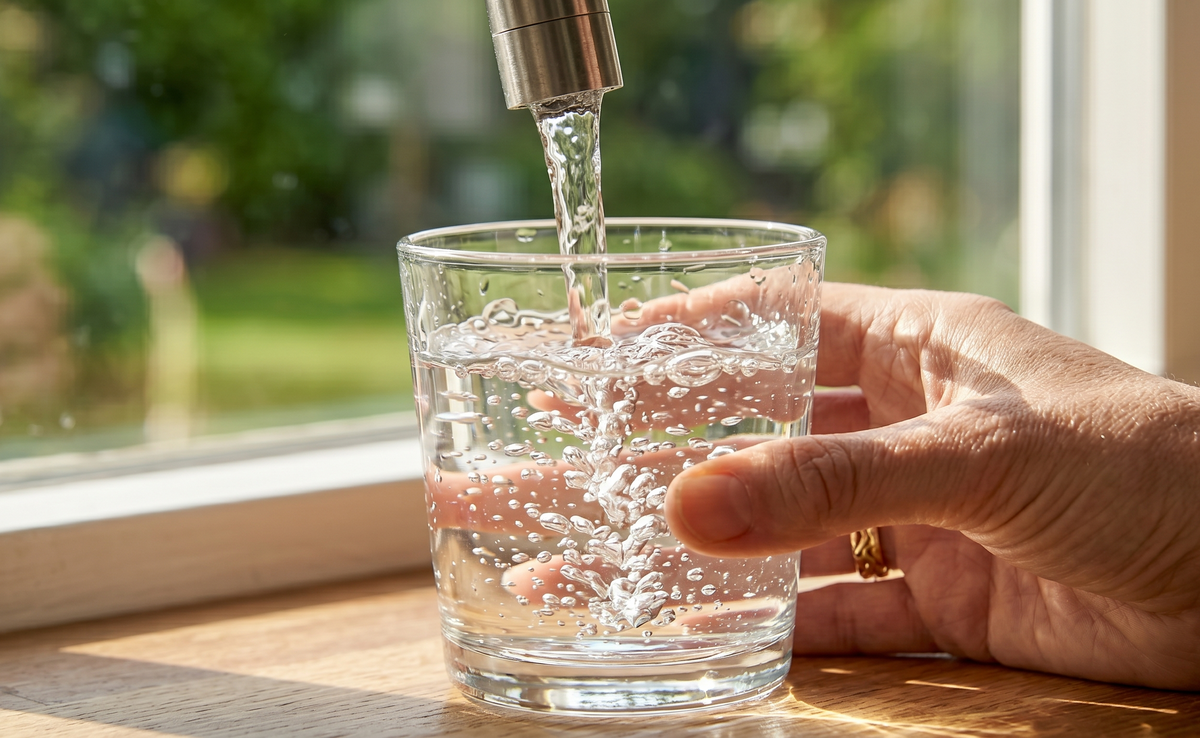
Most of us don’t think much about what’s in our drinking water, as long as it looks clear and tastes normal.
But that also means it’s easy to miss the things you can’t see. Some substances don’t affect taste, smell, or appearance at all—and the only way to know they’re there is to test for them.
Nitrates are one of these.
They’re one of the more commonly monitored contaminants in drinking water, particularly in agricultural areas.
Understanding how nitrates get into water—and how to test for them—can help you get a clearer picture of what’s actually in your supply.
Nitrates are naturally occurring compounds made up of nitrogen and oxygen. They’re found in soil, water, and many foods.
You’ve probably come across them before on food labels—particularly on products like bacon or cured meats, often labelled as “no nitrates added”.
In the environment, they’re part of a natural cycle. But human activity—especially agriculture—can increase the amount that ends up in drinking water.
Nitrates don’t usually enter water through a single source. Instead, they build up over time through a combination of environmental and human factors.
This often happens gradually, which is why it can go unnoticed.
The most common pathways include:
Once present, nitrates dissolve easily in water, making them difficult to remove without specialised treatment.
Nitrates are colourless, odourless, and tasteless.
That means there are no obvious indicators in your drinking water:
Your water can appear completely normal, even when nitrate levels are elevated.
This is why they’re sometimes described as a “silent” contaminant—not because they’re rare, but because they’re difficult to detect without testing.
Nitrates are a normal part of the environment, and they’re also found in many foods. So their presence in water isn’t unusual.
What matters is the level, and how consistently you’re exposed to it over time. Researchers continue to study how long-term nitrate exposure may affect health over many years.
At higher concentrations, nitrates can affect how oxygen is carried in the blood. This is why drinking water standards set limits and monitor levels closely.
Infants are the most sensitive, which is why guidance around preparing water for babies is more cautious—particularly because elevated nitrate exposure has historically been linked to “blue baby syndrome” (methemoglobinemia). For most healthy adults, regulated water supplies are generally considered safe—but levels can vary in certain situations, particularly with private water sources.
In the UK, public water supplies are regulated and regularly tested. For most households, this means nitrate levels are kept within defined limits.
But there are situations where levels can vary more, and where having your own understanding becomes more useful:
In these cases, testing becomes particularly useful, as conditions can change over time.
Because nitrates aren’t visible, testing is the only reliable way to know whether they’re present.
There are a few practical options:
| Method | What it’s good for | Things to keep in mind |
|---|---|---|
| Water quality report | Understanding general levels in your area | Doesn’t reflect your exact tap water |
| Home test kit | Quick, convenient check at home | Results may be less precise than lab testing |
| Laboratory testing | Accurate, detailed results | Takes more time and usually costs more |
Water suppliers and local authorities publish regular reports that include nitrate levels. This can give you a general sense of water quality in your area.
Home kits can provide a quick indication of nitrate levels in your water. They’re particularly useful if you use a private water supply or want a more immediate snapshot.
When choosing a testing kit, look for one that specifically measures nitrates (sometimes listed as NO₃⁻). Many basic water test kits don’t include this by default, so it’s worth checking the details before buying.
Simple test strips can give a quick indication of nitrate levels, while more detailed kits or laboratory tests provide greater accuracy if you want a clearer picture.
For more detailed results, laboratory testing can provide a precise measurement of nitrate levels and other potential contaminants.
This is often the most accurate option, especially if you’re making decisions about long-term water quality.
If testing shows that nitrates are present in your water, the next step is understanding what those numbers actually mean.
In the UK, drinking water standards for nitrates set a limit of 50 milligrams per litre (mg/L). Public water supplies are monitored to stay within this range.
As a general guide:
If you’re preparing water for a baby, it’s worth being especially cautious with elevated nitrate levels, as infants are more sensitive.
If you’re using a private water source, or if levels are higher than expected, having this information gives you a clearer starting point for deciding what to do next.
Not all filtration systems are designed to address nitrates, so it helps to understand which types of filters can and can’t reduce nitrate levels.
Nitrates aren’t something most people can see or detect day to day.
But they are a normal part of how water interacts with the environment—and in some cases, they can build up in ways that aren’t immediately obvious.
Testing isn’t about expecting a problem. It’s simply a way to understand your water more clearly.
For many households, that clarity brings peace of mind. And if something does show up, you’ll know what to look into next—and how to respond with confidence.
How do nitrates get into drinking water?
Nitrates typically enter water through agricultural runoff, animal waste, septic systems, and natural soil processes. Rainwater can carry them into groundwater and rivers, which may be used as drinking water sources.
Can you taste or smell nitrates in water?
No. Nitrates are colourless, odourless, and tasteless, which means they can be present without any noticeable change in your water.
How can I test my water for nitrates?
You can check your local water supplier’s report, use a home testing kit, or arrange laboratory testing for more precise results.
Are nitrates more common in certain areas?
Yes. Nitrate levels tend to be higher in agricultural areas or where private water supplies are used, as these are more exposed to environmental factors.
Do standard water filters remove nitrates?
Most standard filters are not designed to remove nitrates. More specialised systems, such as reverse osmosis or ion exchange filters, are typically required.
Nitrate and nitrite are related compounds, but they behave differently in the body and have different implications for drinking-water quality. Learn how they differ, what the drinking-water limits ...

“Blue baby syndrome” is one of the key reasons nitrate levels in drinking water are regulated. Here’s how it works—and why it still matters today.
Research into nitrates and cancer is still evolving, but scientists are paying closer attention to what long-term exposure in drinking water could mean for health over time. Here’s what current res...

Boil water notices can feel unexpected, but they’re a normal part of how water quality is managed. This guide explains what they mean, why they happen, and exactly what to do at home—so you can han...
A viral video shared on X (formerly Twitter) has attracted millions of views. In the clip, a man attempts to prove that bottled mineral water is heavily contaminated by using an electrolysis device...