


Erfahren Sie, wie Nitrat ins Trinkwasser gelangt, welche Grenzwerte gelten und was aktuelle Studien über mögliche Gesundheitsrisiken sagen.
Your Cart
(0 products)
Your cart is empty
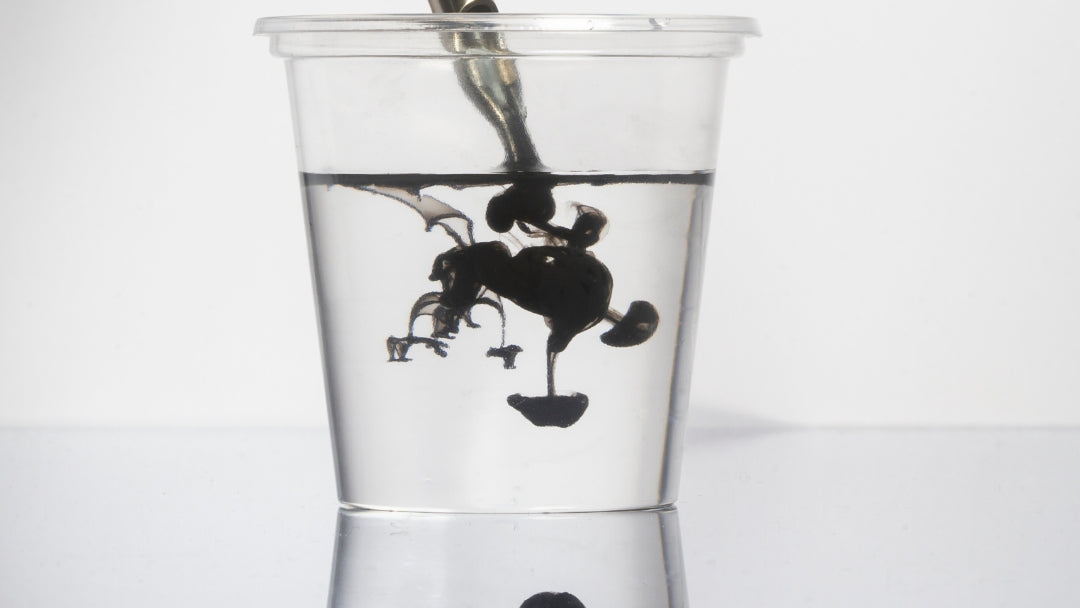
A viral video posted on X (formerly Twitter) has generated millions of views. In it, a man attempts to prove that Cristaline mineral water is heavily polluted. To do so, he uses electrolysis with an anode and cathode to supposedly reveal the presence of pesticides.
The result is dramatic: the water turns dark, almost black or greenish. But is this reliable evidence, fake news, or a genuine health scandal linked to pesticides?
Do bottled waters really contain beneficial minerals for your health?
The video begins with several glasses filled with mineral water, including Cristaline. He then performs an electrolysis test, claiming the device will burn all the fine particles in the water and reveal pesticides.
The result looks striking, as a dark deposit appears in the glass. However, Le Parisien, which covered the story, consulted a professor and chemistry researcher.
He explained that pesticide concentrations in water are far too low to be revealed by electrolysis. Levels are generally microscopic and cannot be seen with the naked eye.
This means the test is not reliable for detecting pesticides. So why does the water change colour?
The explanation lies in the chemical reactions created between the anode and cathode.
For his experiment, he uses Wattwiller water, which is lightly mineralised, and Cristaline water, which contains more minerals.
He then points to the unpleasant colour that appears in the Cristaline glass, claiming it proves the water contains no beneficial minerals such as calcium and only harmful substances.
When water contains minerals such as sodium, potassium or magnesium, it can conduct electricity more easily.
This electrolysis device mainly reveals whether water contains dissolved minerals. That is why the darker colour appears in the Cristaline glass.
According to the chemistry researcher, the more mineralised the water, the stronger the reaction may be, although that is not the only factor.
He also explains that an electrical current flows because minerals conduct it, but one of the electrodes is made of iron and takes part in the reaction.
The greenish colour seen in the glass comes from the iron anode dissolving into the water. This releases ferrous ions, which appear green.
This method therefore does not prove the presence of pesticides in mineral water. It mainly demonstrates oxidation of the metal electrode.
So this is not evidence of pesticide contamination — but does that mean bottled water is always the best option?
Pesticides in water can present risks to both human health and the environment. Even at low doses, long-term exposure may have harmful effects.
Intensive agriculture remains one of the main causes of this widespread pollution, with chemical compounds that persist in soil and water.
Surface water and groundwater can both be contaminated by pesticides. In France, traces have been detected in many rivers and in a significant proportion of groundwater reserves.
Regulations set quality limits for individual pesticide substances in drinking water. These limits are indicators of water quality rather than direct toxicity thresholds.
Combined exposure to multiple molecules at once is also a growing concern.
Health authorities compare measured concentrations with toxicological reference values. If limits are exceeded, restrictions on water use may be introduced.
Reducing contamination requires better farming practices, stronger source protection and improved water treatment systems.
Recent studies suggest bottled mineral water is not entirely free from contamination concerns.
A 2024 analysis by the Pesticide Action Network reportedly detected trifluoroacetic acid (TFA), a persistent “forever chemical”, in 63% of bottled water samples tested.
This compound can result from the breakdown of certain pesticides and raises questions about spring water quality.
Another study published in early 2024 found microplastics in bottled water, averaging around 240,000 fragments per litre.
These particles, mainly nanoplastics, come from packaging materials and water processing methods.
Investigations have also shown that some mineral water producers used unauthorised treatments to mask contamination.
The use of activated carbon filters and ultraviolet light — normally prohibited for natural mineral water — has raised questions about the claimed natural purity of some brands.
Although contaminant levels often remain below health thresholds, these findings support the need for stronger monitoring and tighter controls.

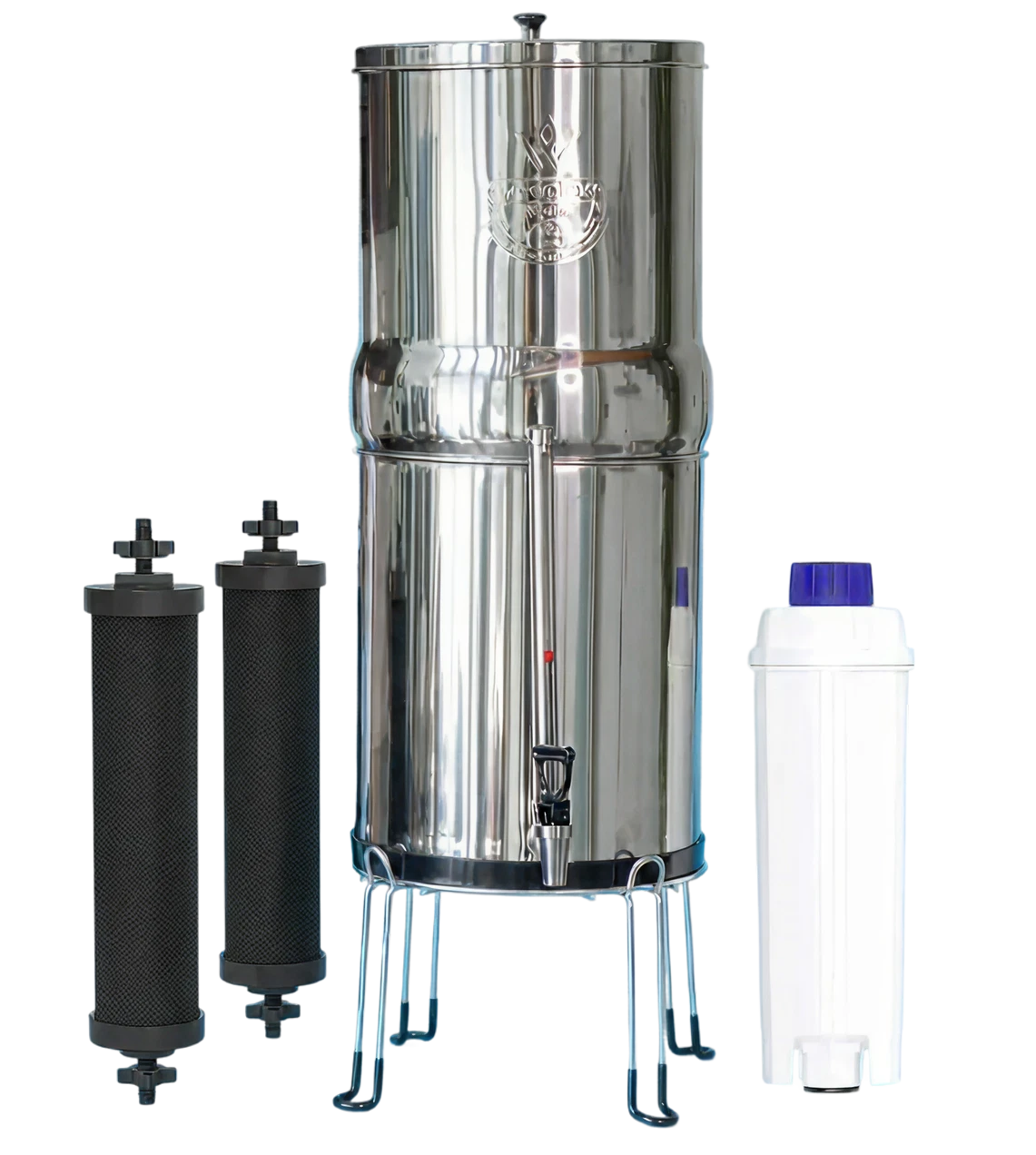
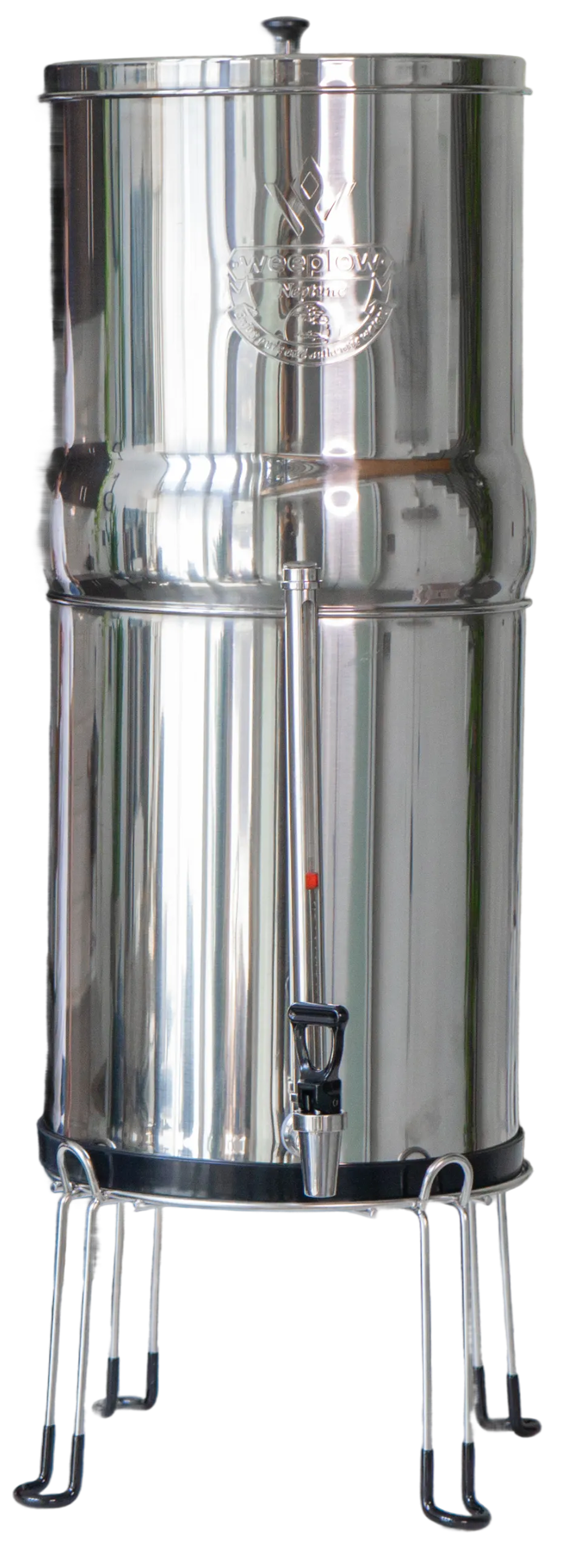
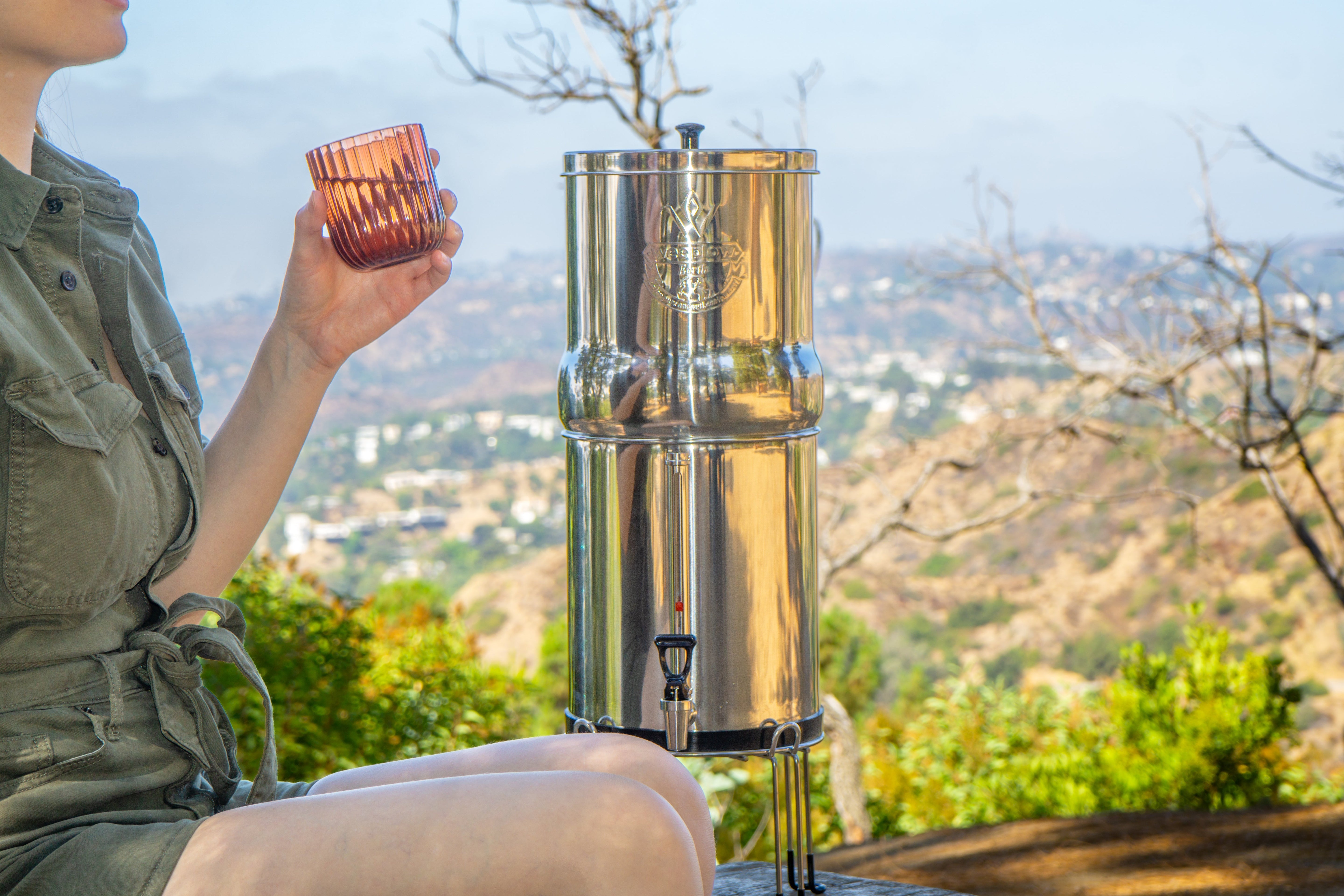
The gravity filters offered by Weeplow provide an effective way to improve water quality from the tap.
These systems work without electricity, using gravity to pass water through specialist filter cartridges.
They are designed to help reduce many common contaminants found in tap water, including pesticides and unwanted residues.
Filtered water often has a different composition from untreated tap water. Beneficial minerals are generally retained, while potentially unwanted substances may be reduced.
Unlike dramatic electrolysis demonstrations, gravity filtration improves water quality through practical everyday treatment rather than visual spectacle.
Filtered water is not demineralised and still retains essential minerals.
For households looking to improve tap water taste and quality, gravity filters can offer a reliable and cost-effective option.
Erfahren Sie, wie Nitrat ins Trinkwasser gelangt, welche Grenzwerte gelten und was aktuelle Studien über mögliche Gesundheitsrisiken sagen.
Researchers are increasingly studying the possible effects of chronic exposure to nitrates in drinking water. Here is what current research actually says about the potential risks associated with l...
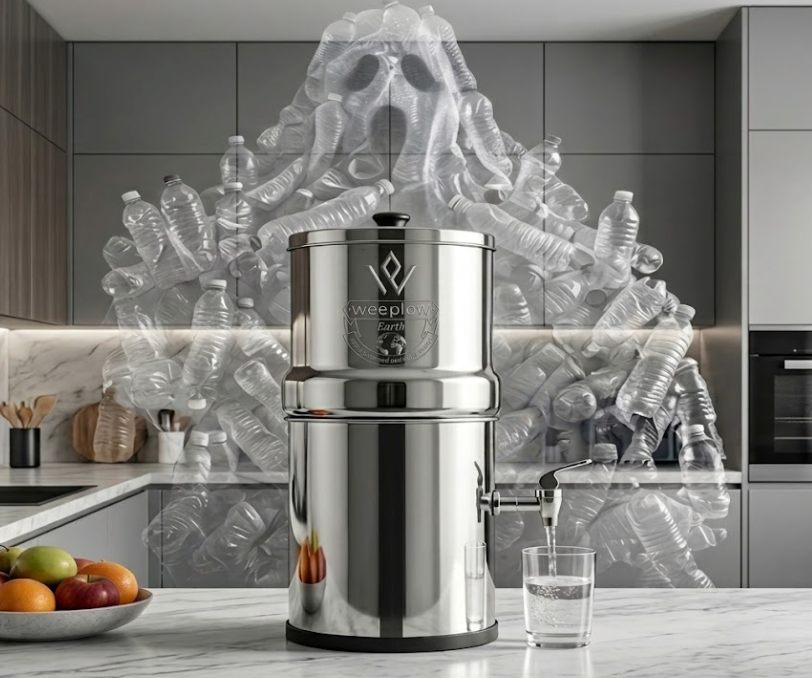
Introduction Each year, a French household spends hundreds of euros on bottled water. It is carried home from the supermarket, stored in the kitchen, reassured by the image of mountains on ...
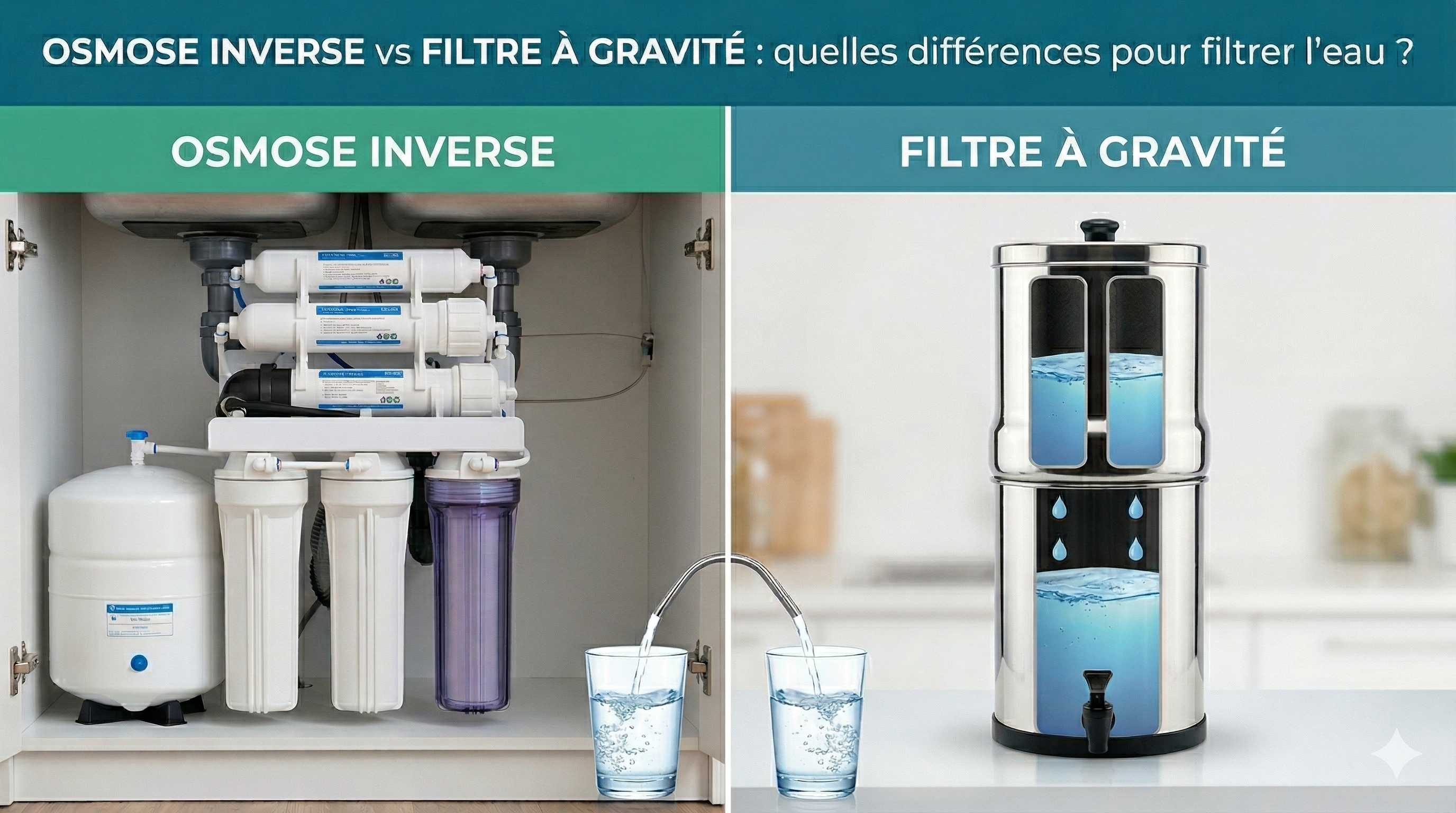
Reverse osmosis or a gravity filter: what are the differences when filtering drinking water? Discover how these two technologies work, along with their advantages and limitations for reducing conta...
Tap water is often treated to make it drinkable, but it can still contain traces of pollutants. These may include chlorine, pesticides, nitrates and pharmaceutical residues. These substances can ca...